

Blog
The Oversight—A Blog on CRO Selection, Operational Excellence, and Clinical Delivery
Building an Escalation Culture in Clinical Operations
Every clinical organization says it wants problems raised early. Most organizations behave in ways that guarantee the opposite.
The behaviors are rarely deliberate. A study manager reports a site enrollment problem and is immediately asked for a recovery plan, a root cause analysis, and a revised projection, all within the same conversation. The message received is that raising an issue…
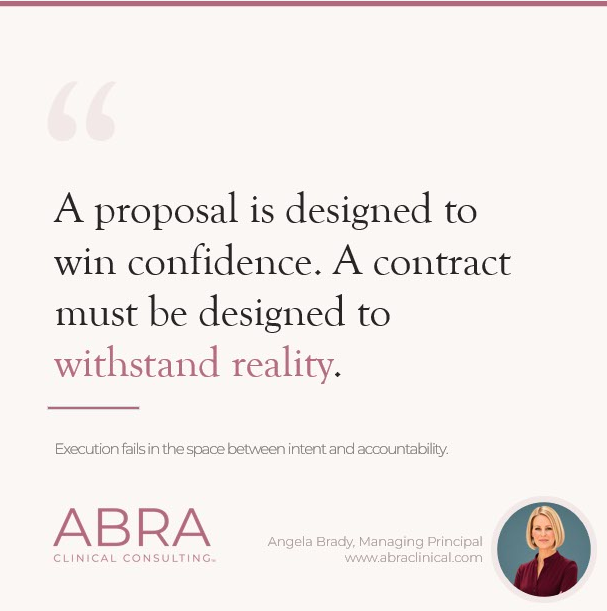
From Proposal to Contract
All too often, the proposal that wins the bid is not the story that's actually executed.
CRO proposals are crafted like compelling movie trailers—tight narratives, confident timelines, reassuring team slides. But somewhere between the bid defense and signing the contract, that narrative loses its operational spine. What remains is a signed document that governs legally, but not operationally.
A contract should function as the…
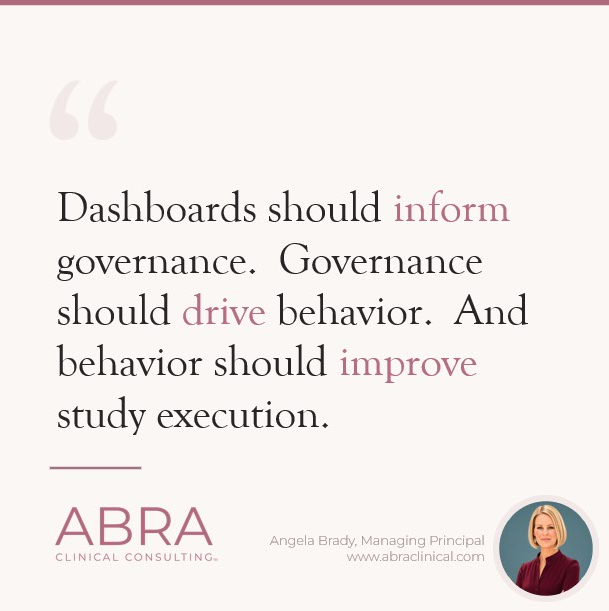
From Dashboards to Decisions: The Real Test of CRO Oversight
Too many sponsor-CRO governance meetings turn into slide reviews. We look at timelines, enrollment, protocol deviations, and data quality metrics, nod in agreement, and move on. But if the metric doesn’t elicit a decision, an escalation, or a behavior, it’s just status reporting.
For biotech and emerging biopharma, effective governance is the mechanism that converts limited time, capital, and CRO capacity into accountable decisions and protected development timelines.
The metrics that matter are those tied to…
Vendor Selection Is a Governance Decision
Sponsors regularly treat CRO and vendor selection as a sourcing exercise with a leadership rubber stamp at the end. The bid defense is scored, the pricing is compared, the recommendation goes up, and an executive signs. The structure looks rigorous. It frequently produces the wrong choice.
The problem is that the selection criteria that predict delivery success are largely invisible in a competitive bid process. Every CRO presents experienced leadership at the defense. Every CRO shows relevant…
Leading Global Clinical Teams Across Time Zones and Cultures
A clinical program running across North America, Europe, and Asia-Pacific creates leadership conditions that co-located management practices do not address. The obvious challenge is scheduling. The real challenges are subtler and more consequential.
Escalation norms differ substantially by region and organizational culture. A study coordinator in one country may flag a potential eligibility issue immediately and directly. A counterpart elsewhere may consider it inappropriate…
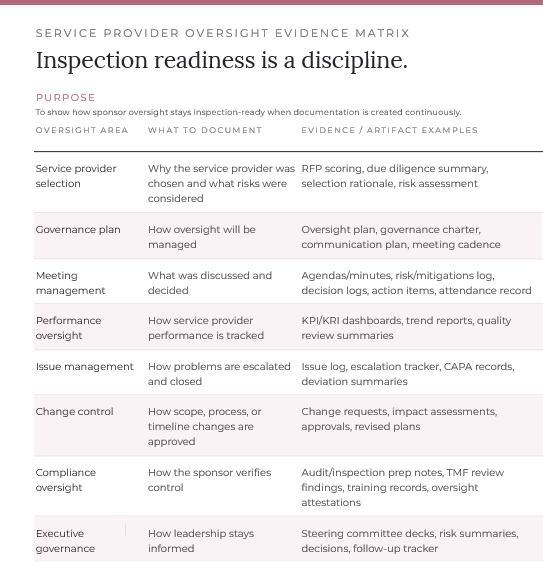
Inspection-ready Vendor Oversight: Building the Audit Trail as You Go
Inspection readiness is often treated like a final chapter, assembled when the story is nearly complete. In reality, it is the act of writing the story itself.
Too many organizations approach inspections as reconstruction: piecing together emails, minutes, and decisions after the fact, hoping the narrative holds. But regulators are not looking for a well-edited retrospective. They are looking for evidence of continuous, intentional oversight.
ICH E6(R3) reinforces a critical truth: while activities may be outsourced, accountability never is. Sponsors must demonstrate…
Red Flags: When CRO Governance Is Failing
Most programs don’t fall off track because of bad science or evil intentions. They drift because they become someone’s second priority.
In a CRO delivery model, priority is inferred. It shows up in who gets the fastest answers, where senior attention lands, and which decisions move without friction. And when governance is treated as a formality rather than a design choice, even well-funded, high-potential programs can slide to the bottom of a very long list.
A governance charter, when done well, is…
Succession Planning for Emerging Biopharma Clinical Organizations
Succession planning sounds like a large-company concern. For an emerging biopharma sponsor, it is arguably more urgent, because the concentration risk is higher. When one person holds the operational history of a program, their departure is not an inconvenience. It is a material risk to the asset.
The concentration is easy to miss because it does not look like a single point of failure from the inside. The VP of Clinical Development knows…
Not All CROs Are Built For All Programs
Not all CROs are built for all programs.
Fit-for-purpose CRO selection is no longer a “nice to have”. It is a core strategic decision that shapes execution, risk, and ultimately, outcomes. Too often, sponsors default to brand recognition or broad “full-service” claims, but the real question is who can do your study exceptionally well.
The strongest partnerships are built by…
Five Myths About Choosing a CRO (And What Actually Drives Trial Success)
Selecting a CRO is often treated like casting a blockbuster: choose the biggest name, assume the performance will follow.
After 25+ years inside CRO operations and working alongside sponsors, I can tell you—trial success is rarely determined by who is on the marquee. It’s driven by what happens in the execution behind the scenes.
Here are five myths I still see shaping decisions and where they lead sponsors astray…
Mentorship Structures That Actually Work in Clinical Research
Most mentorship programs in clinical research organizations fail in the same way. A pairing is assigned, two calendar invitations are sent, three conversations happen, and the relationship quietly lapses. The program reports high participation and produces almost no development.
The failures are structural rather than personal. Four adjustments change the outcome.
Pair for the gap, not for seniority. The most useful mentor for a clinical trial manager learning vendor oversight is often…
Decision Rights in Matrixed Clinical Trial Teams
Clinical trial teams are matrixed by design. The study lead coordinates contributors from medical, regulatory, biostatistics, data management, safety, and supply chain, none of whom report to them. This structure is sensible. It is also the source of most avoidable delay in clinical execution.
The delay rarely comes from disagreement. It comes from ambiguity about who decides. A question about whether a particular data discrepancy requires a query or a protocol deviation report circulates for eleven days, touching four functions, because nobody is certain the decision belongs to them and everybody is certain it might belong to someone else. The eventual answer…

CRO Selection Isn't Procurement. It's Clinical Strategy.
Most sponsors treat CRO selection like procurement.
But your CRO should not be a vendor you source. Your CRO is the operations engine that runs your clinical program. How you select them determines how your trial actually runs: how decisions get made, how problems surface, how fast you move when something breaks. Pick for price and capacity alone, and you have engineered the constraints you'll fight for the next three years…
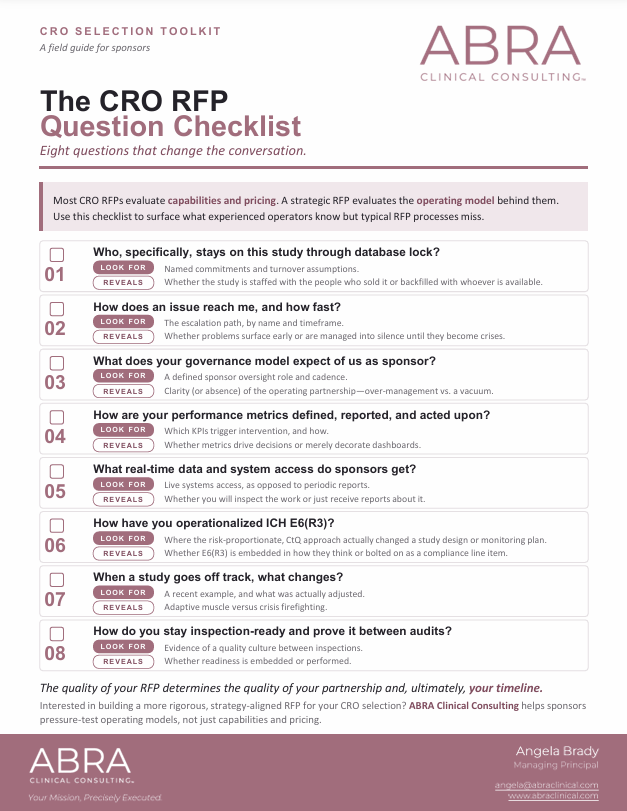
What Sponsors Should Really Be Asking in CRO RFPs
Most CRO RFPs are built by biotech and emerging biopharma around capabilities and pricing grids. They ask what a CRO can do and what it costs. They rarely ask what happens when momentum falters, timelines stall, or the study runs aground on a risk no one charted.
The questions that actually determine success are the ones CROs would prefer not to answer directly. These are the questions that change the conversation…
Leading a Clinical Team Through a Protocol Amendment
Protocol amendments are among the most common events in clinical research and among the least well-led. The operational mechanics are usually handled competently. The team dynamics almost never are.
An amendment lands on a study team that has already built a rhythm. Sites are trained, systems are configured, monitors know their visits, and the data management plan reflects a specification that is about to change. The amendment invalidates…
What ICH E6(R3) Asks of Clinical Leaders
ICH E6(R3) reframes good clinical practice around quality by design and proportionate, risk-based thinking. Most of the commentary has focused on what this means for processes and documentation. The more interesting question is what it asks of the people leading clinical programs.
The revision assumes judgment. It moves away from prescriptive uniformity and toward decisions that are reasoned, documented, and defensible in context. A sponsor is expected to…
The Promotion Nobody Prepares You For: CRA to Clinical Project Manager
The clinical research industry promotes its strongest monitors into project management and then acts surprised when some of them struggle. The two roles share a vocabulary and almost nothing else.
A clinical research associate succeeds through precision, independence, and depth on a defined set of sites. The feedback loop is short and the standard of performance is legible: findings are documented correctly or they are not. A clinical project manager succeeds through…

The Hidden Cost of Choosing the Wrong CRO
The protocol was elegant. The science was sound. On paper, the Phase 1/2 program looked like it would move cleanly from first patient in to meaningful signal.
But somewhere between kickoff and execution, things began to drift—missed milestones explained away in status calls, familiar faces replaced by new ones, metrics that looked reassuring but said very little. No single moment of failure. Just a slow unraveling…
The Weight of CRO Selection
For an emerging biopharma/biotech, the decision of which CRO you select carries a weight it doesn’t at a large pharma. You likely have one shot at the program, a small team, and a runway that doesn’t forgive a misstep. How you select a partner matters as much as which partner you select.
Many sponsors still treat this activity as procurement, but it's worth it to turn a one-time activity into a strategic capability — building the muscle to choose well, again and again, not just once.
Four moves you can make…
CRO Oversight Is a Leadership Skill, Not an Administrative One
Sponsor oversight of contract research organizations gets treated as a compliance exercise in far too many organizations. Someone builds an oversight plan, populates a metrics dashboard, schedules a monthly governance call, and files the minutes. The regulatory box is checked. The oversight is not real.
Genuine oversight is a leadership function because…