
Blog
The Oversight
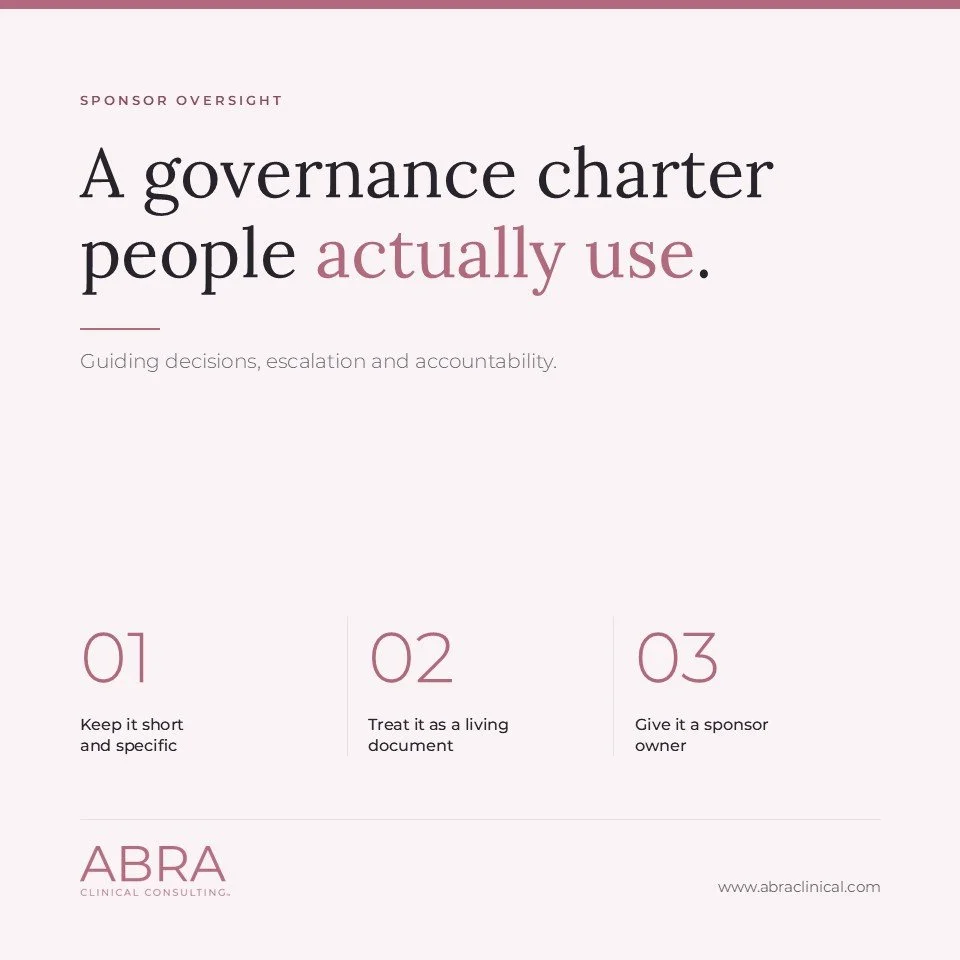
Writing a Governance Charter People Actually Use
A governance charter people actually use defines decisions, not just meetings. It says who decides what, at which level, how quickly, and what happens when a decision doesn't get made. Most charters describe meeting cadence and attendees and stop there, which is why they are signed at kickoff and rarely opened again.
They are written for the contract rather than for the study. They are adapted from…
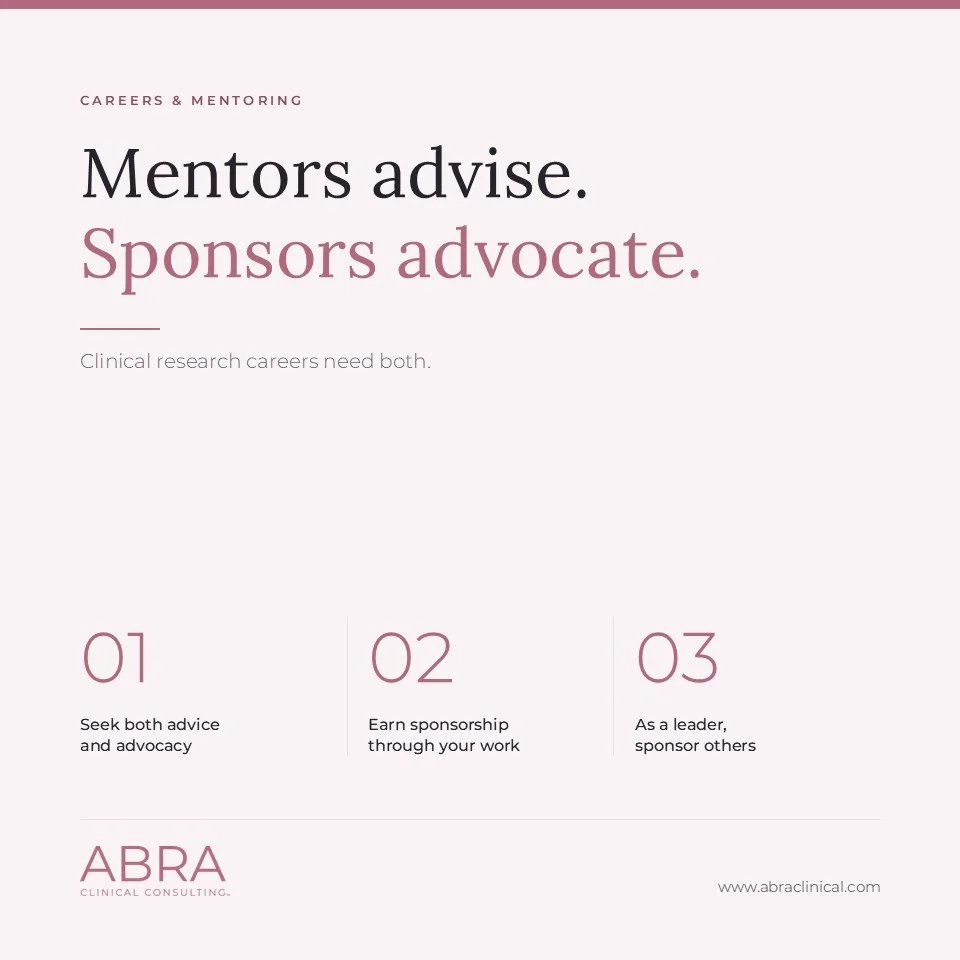
Mentors Advise. Sponsors Advocate. Clinical Research Careers Need Both.
Mentors advise you. Sponsors advocate for you in rooms you are not in. Most clinical research professionals have had a mentor at some point. Far fewer have had a sponsor, and that difference often explains why capable people plateau.
In more than 25 years in this industry, the turning points in my own career rarely came from advice alone. They came when someone senior put their own credibility behind me: recommending me for a stretch assignment, naming me for a leadership role or defending a decision I had made when others questioned it…
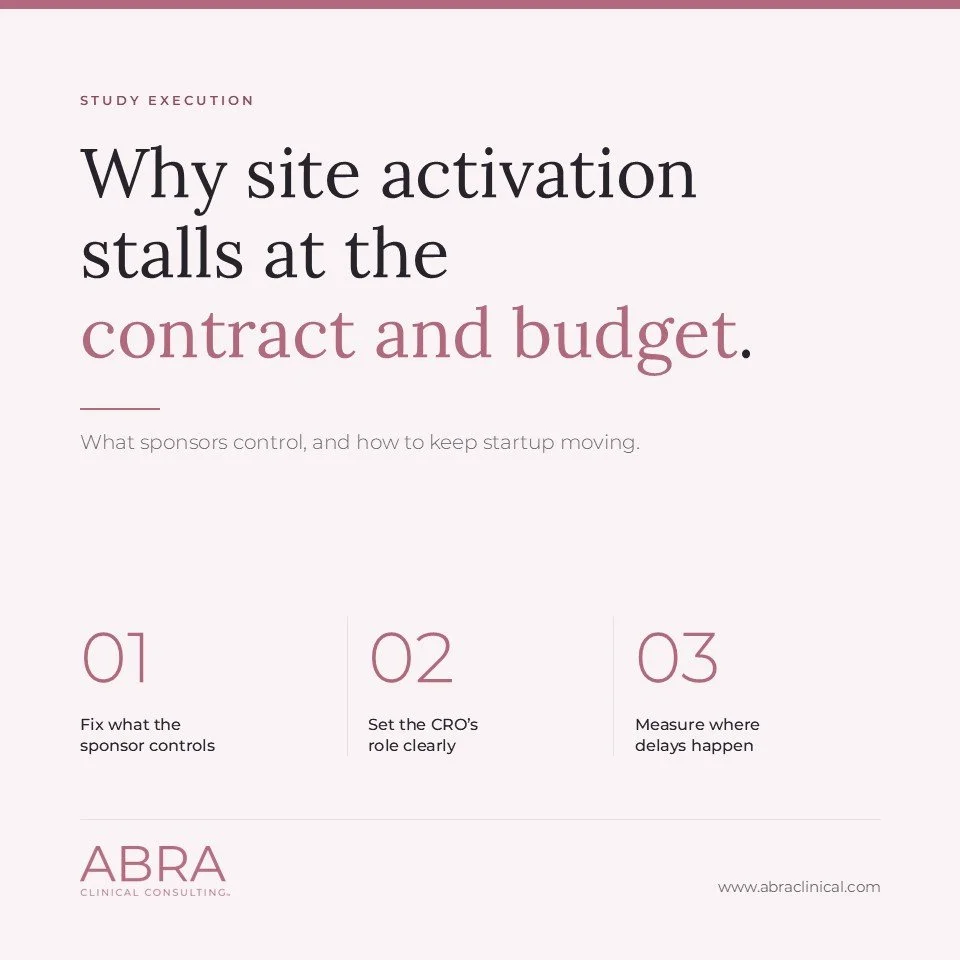
Why Site Activation Stalls at the Contract and Budget
Site activation most often stalls at the clinical trial agreement and the site budget. Not because anyone is careless, but because the negotiation involves several parties with different incentives and timelines, and because sponsors often arrive with templates and budgets that do not reflect how sites actually work.
Why do site contracts and budgets take so long?
Many reviewers. Legal, finance, research administration and, at academic centers, coverage analysis all weigh in.
Template friction. Sponsor terms on subject injury, indemnification…
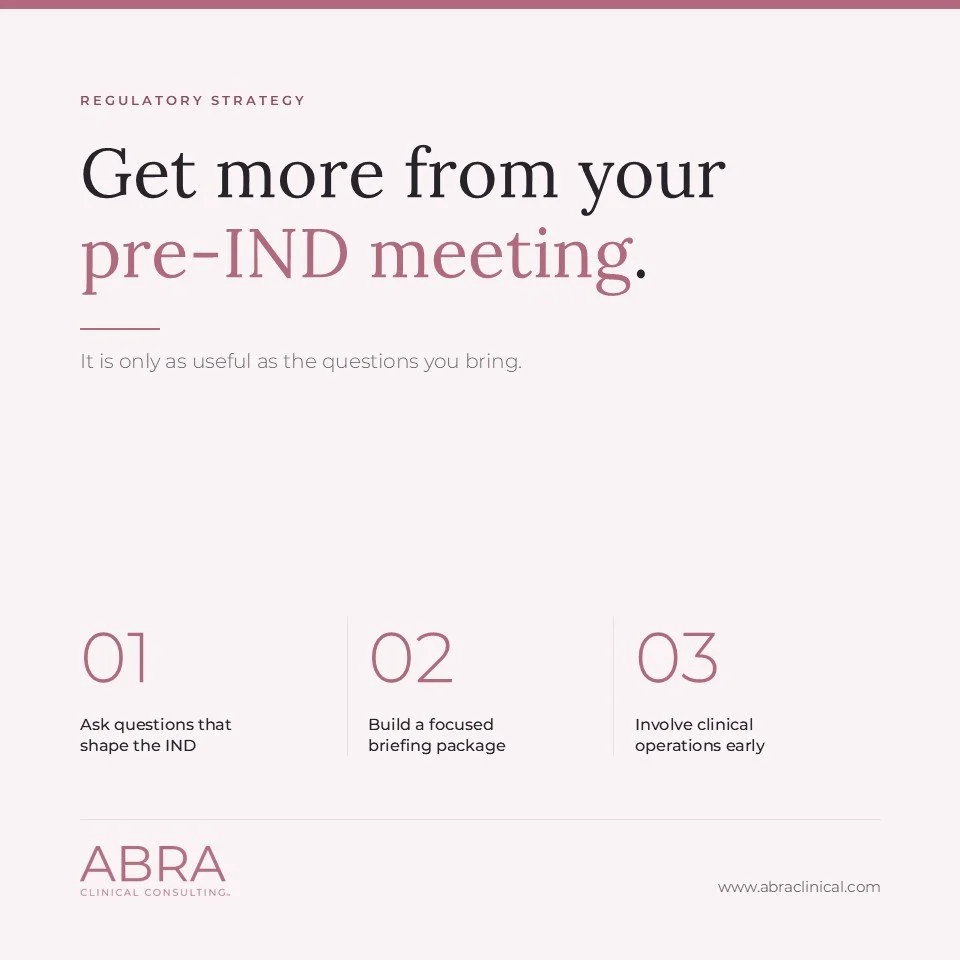
Getting Real Value From Your Pre-IND Meeting
A pre-IND meeting is valuable when it resolves the questions that would otherwise put your IND, timeline or development plan at risk. Too many sponsors use it to present their program rather than to settle uncertainty. The agency responds to the questions you ask, so the real work is in choosing and framing them.
FDA offers pre-IND meetings, a Type B meeting category, so sponsors can discuss…
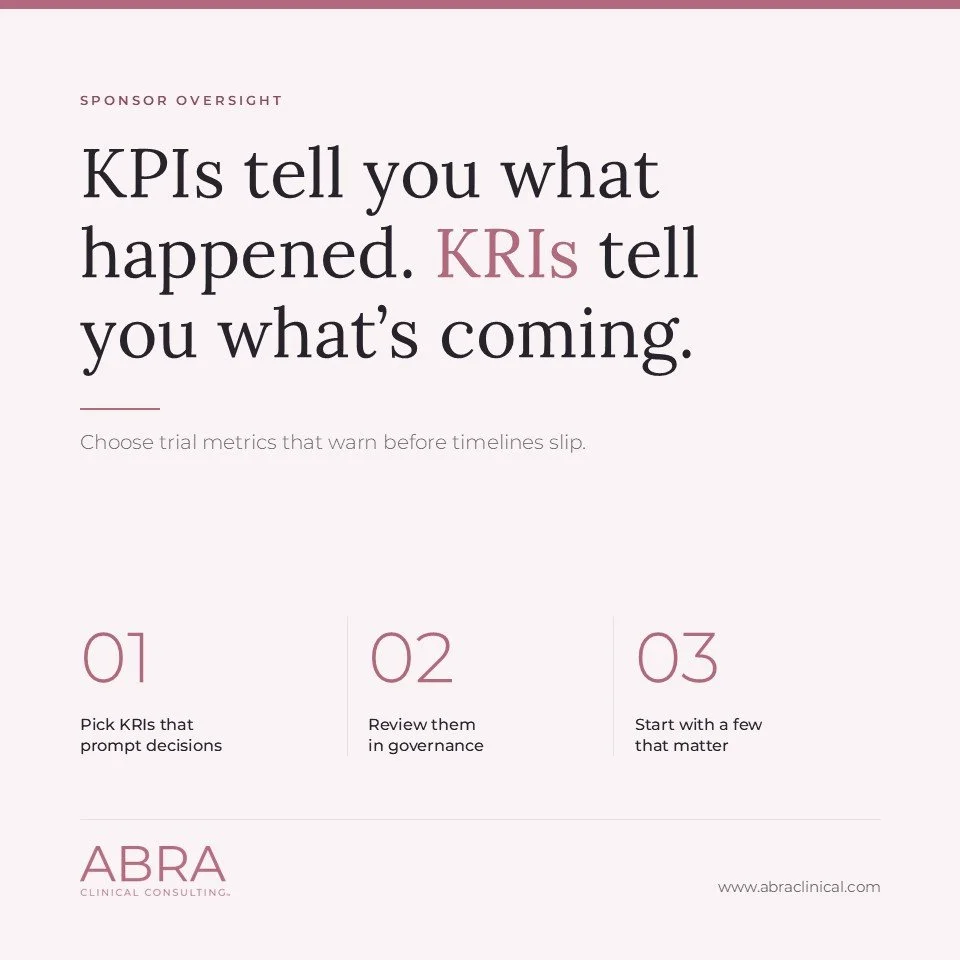
KPIs Tell You What Happened. KRIs Tell You What's Coming.
A key performance indicator tells you how a study performed. A key risk indicator tells you where it is likely to go wrong. Sponsors need both, but most governance dashboards are full of KPIs and nearly empty of KRIs. That is why problems so often arrive at the governance meeting fully formed.
A KPI measures output against a target: sites activated against plan, participants enrolled, queries resolved within…
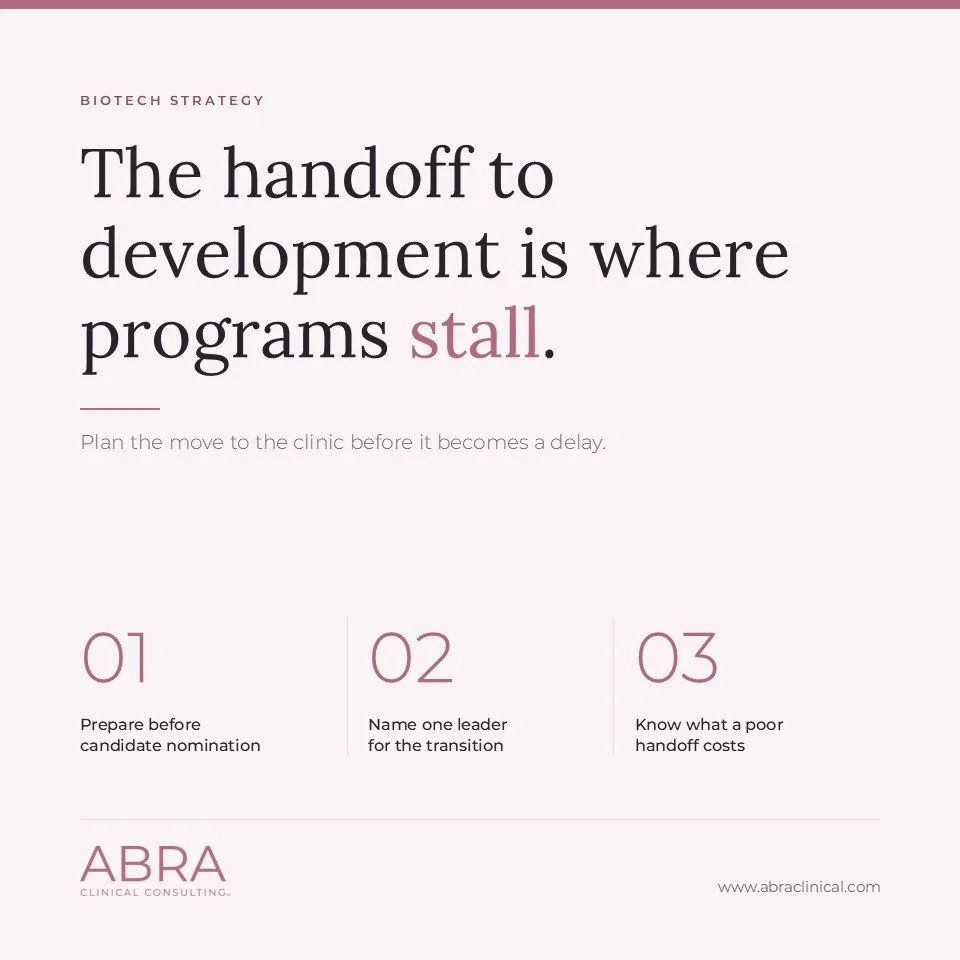
The Handoff From Discovery to Development Is Where Programs Stall
The handoff from discovery to clinical development is where many emerging biotech programs lose their first quarter. Discovery teams are built to answer scientific questions. Development is a different discipline, governed by regulatory, operational and commercial constraints. Programs stall when the handoff is treated as a date on the calendar instead of a deliberate transition with owners, decisions and a plan.
I have watched this happen many times over more than 25 years. The science is ready, the candidate is nominated, the board is…