
Blog
The Oversight
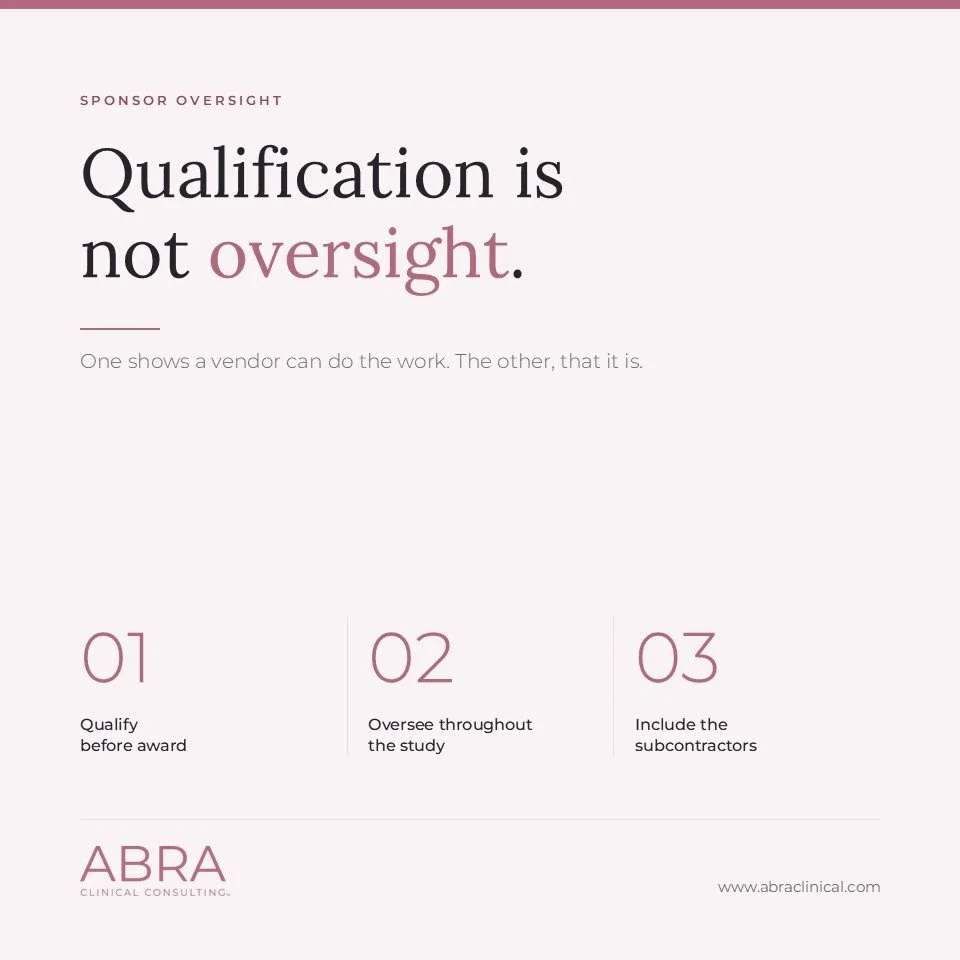
Vendor Qualification Is Not Vendor Oversight
Vendor qualification is a point-in-time judgment, made before award, that a vendor is capable of the work. Vendor oversight is the continuous verification, throughout the study, that the vendor is actually performing that work to the required standard. Many sponsors do one thoroughly and assume it covers the other. It doesn't.
An inspector who asks how you knew your CRO was performing is not asking to see the qualification audit from two years ago…
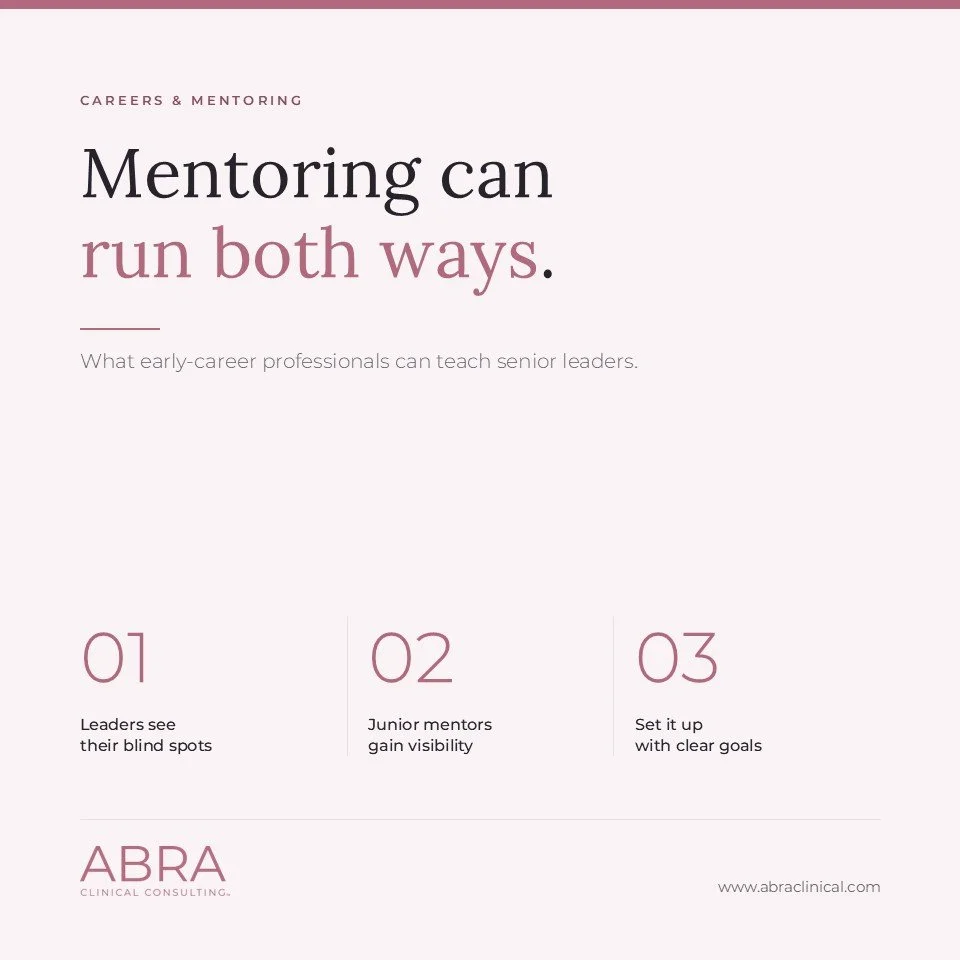
Reverse Mentoring: What Early-Career Professionals Can Teach Senior Leaders
Reverse mentoring pairs an early-career professional, as the mentor, with a senior leader, as the mentee, on topics where the junior person has expertise or perspective the leader lacks. In clinical research, that often means technology, frontline realities and changing expectations about work. Leaders gain insight into their blind spots. Early-career professionals gain visibility and a seat in conversations they would rarely otherwise join…
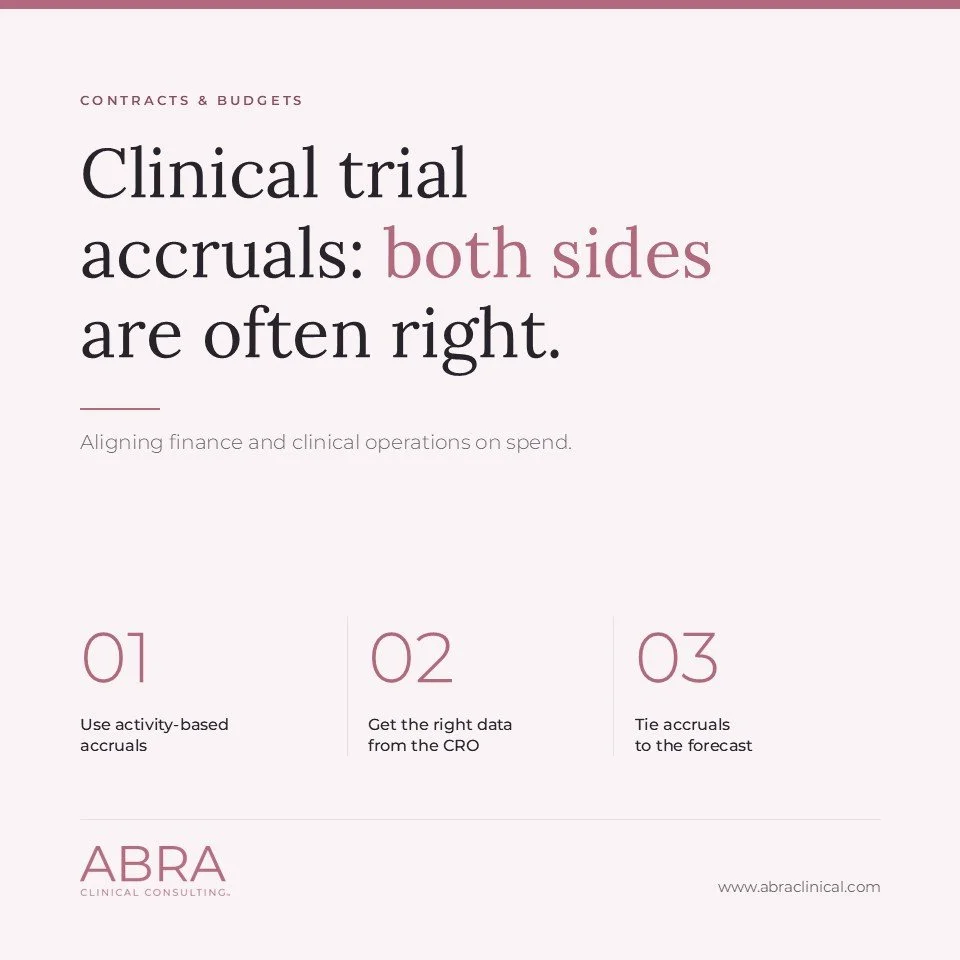
Clinical Trial Accruals: Why Finance and Clinical Operations Disagree
Finance and clinical operations often disagree about clinical trial accruals because they are measuring different things. Finance recognizes expense as work is performed. Clinical operations tends to track invoices, milestones and budgets. CRO invoices frequently lag the work or follow a milestone schedule. The answer is a shared, activity-based view of the study that both teams trust.
Milestone billing rarely matches the pace of work. Pass-through costs, especially site payments, may be invoiced quarterly or…
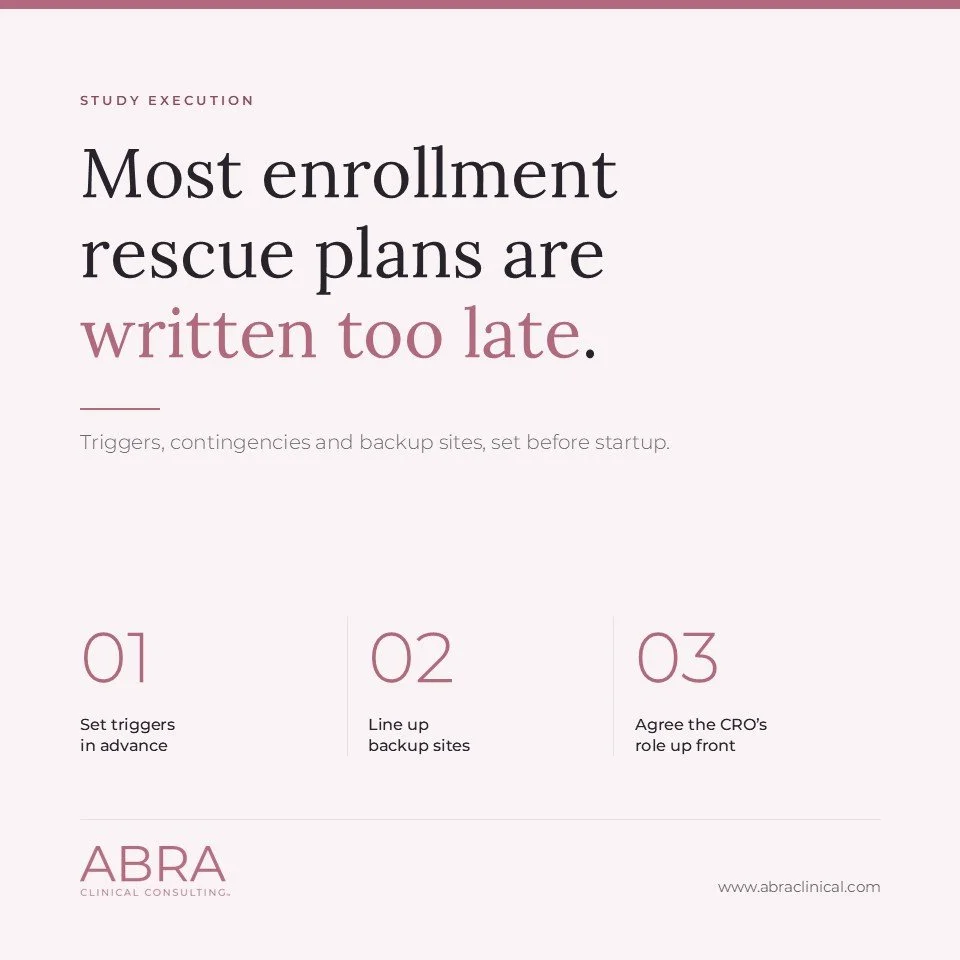
Enrollment Contingency Planning Before You Need It
The time to build an enrollment contingency plan is before first patient in. A good plan includes realistic projections with ranges, defined triggers, pre-identified backup sites, recruitment tactics approved in advance, a reserved budget and clear decision rights. Most enrollment rescue plans fail not because they are bad ideas but because they arrive months too late.
They are written after enrollment has already fallen behind. Backup sites take months…
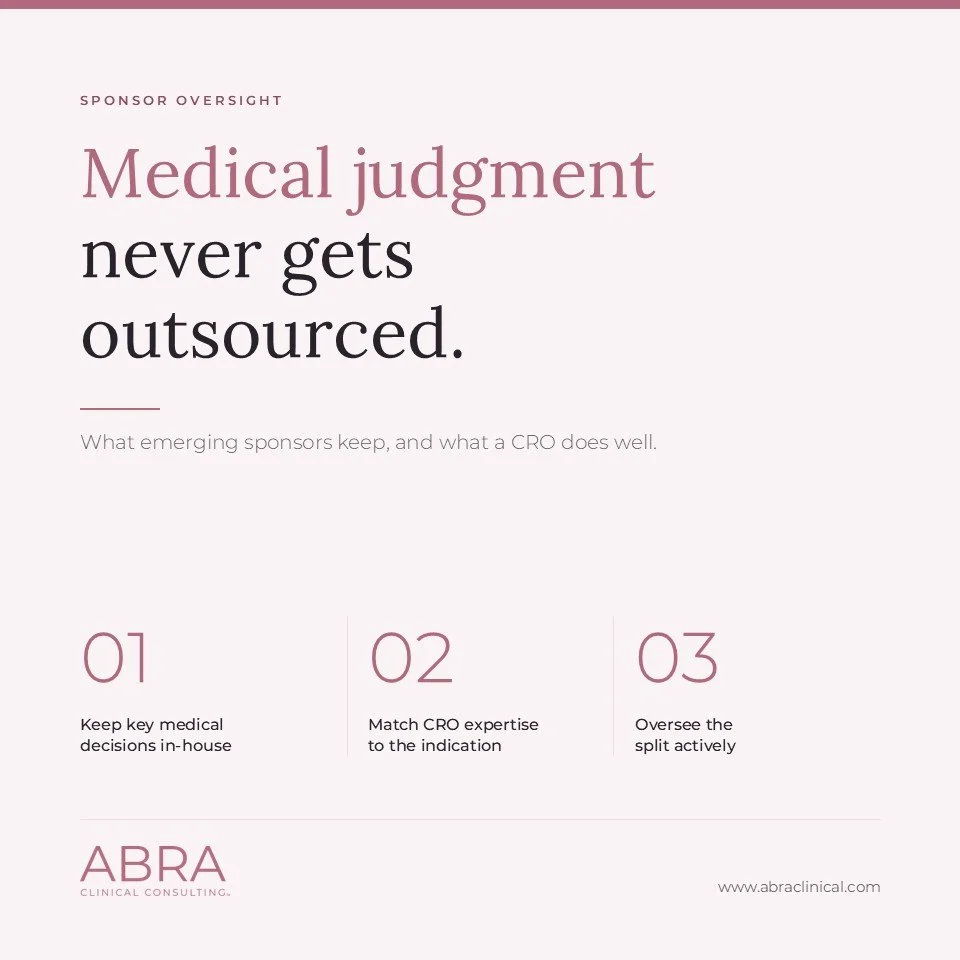
Medical Monitoring: What to Keep and What to Outsource
Sponsors can outsource many medical monitoring tasks, such as answering site questions, first-line review of adverse events and medical review of data listings. They cannot outsource medical judgment or accountability for participant safety. The best arrangements define clearly which decisions stay with the sponsor's physician and which belong to the CRO's medical monitor.
A medical monitor answers sites' medical and eligibility questions, reviews adverse events and serious adverse events, evaluates laboratory abnormalities, reviews…
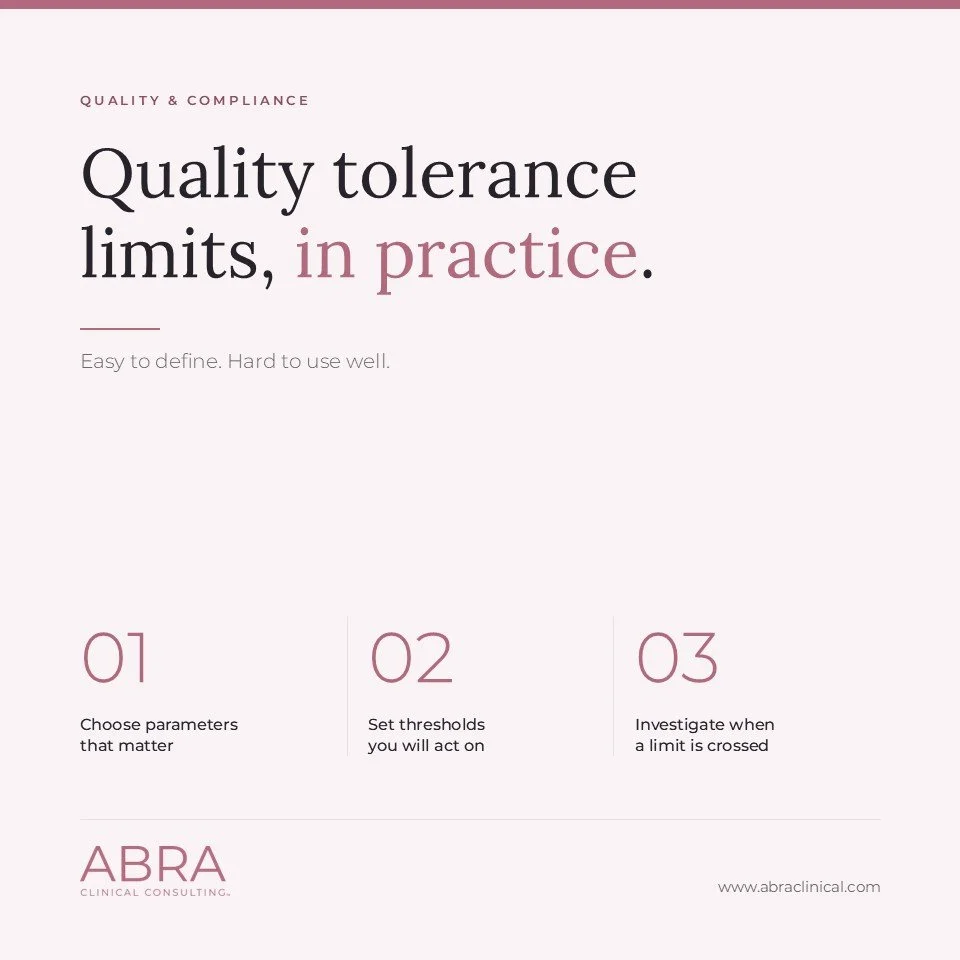
Quality Tolerance Limits in Practice
Quality tolerance limits are predefined thresholds for study-level parameters that, when exceeded, signal a systematic problem that could affect participant safety or the reliability of results. They are easy to define on paper and hard to use well. The value of a QTL lies not in the number itself but in the investigation and action it triggers.
QTLs entered good clinical practice with ICH E6(R2), and E6(R3) continues to expect sponsors to set predefined limits for what matters most and to act when those limits are…
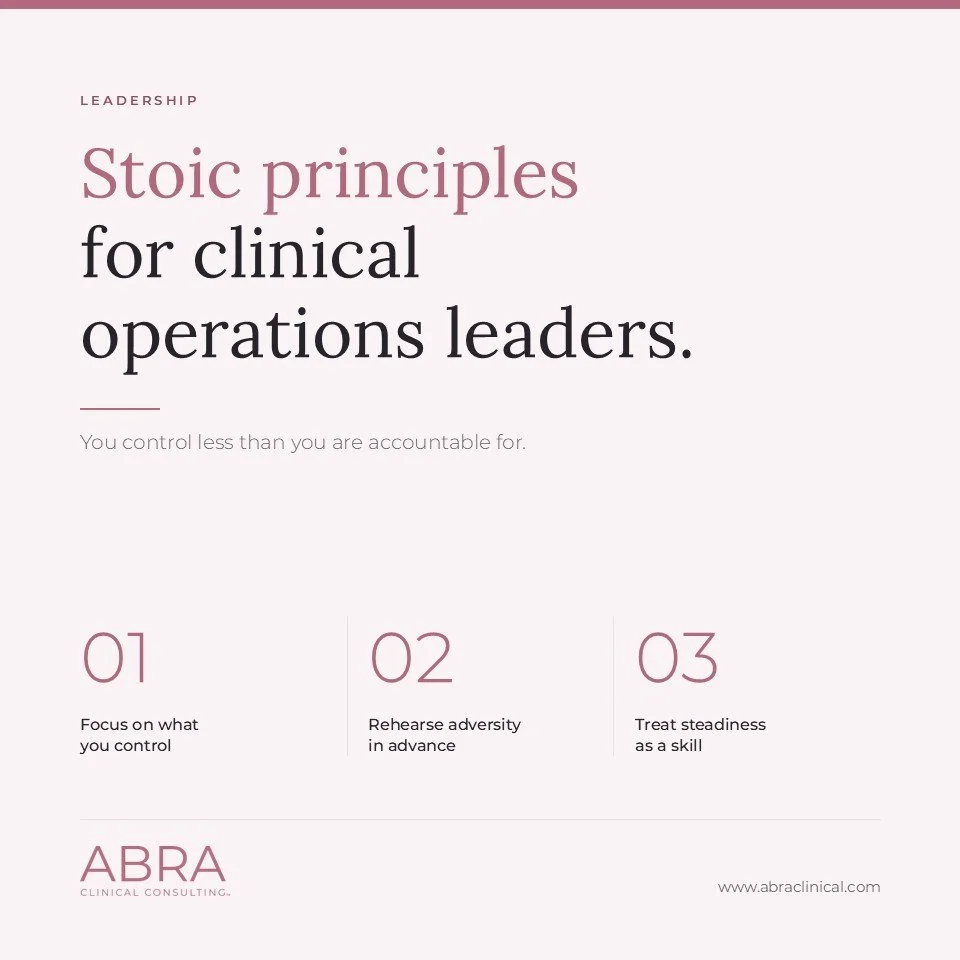
Stoic Principles for Clinical Operations Leaders
Stoic philosophy, with its focus on what we control, judgment before reaction and steadiness under pressure, maps remarkably well onto clinical operations leadership. Clinical leaders are accountable for outcomes shaped by enrollment, regulators, sites and vendors they do not control. The Stoics spent their lives thinking about exactly that problem.
I close many of my notes with "Strive on," a phrase I adopted from my father. It captures something the Stoics understood…
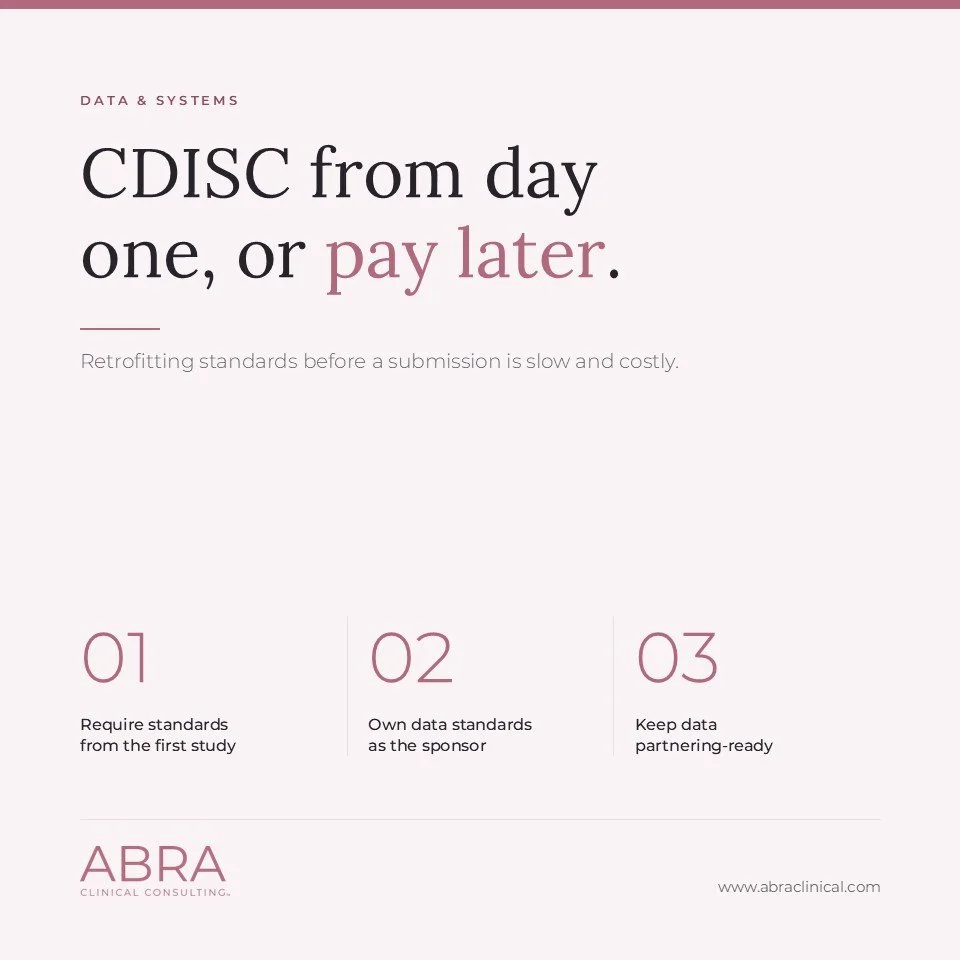
CDISC From Day One: Why Small Sponsors Pay Later
Building CDISC standards into your first study, with CDASH for data collection, SDTM for tabulation and ADaM for analysis, avoids expensive retrofitting later. FDA's study data standards requirements apply to marketing applications for studies that began after December 2016, and other regulators have similar expectations. A sponsor that ignores standards in Phase 1 often pays for it at the worst possible moment.
A first-in-human study feels far from a marketing application. Standards seem like…
Peer Mentoring Circles for Clinical Operations Professionals
A peer mentoring circle is a small group of professionals at similar career stages who meet regularly to work through real challenges together. In clinical operations, where problems are practical and widely shared, circles offer perspective, accountability and a professional network that one-to-one mentoring with a senior leader can't always provide.
Typically four to six people at a similar level, ideally from…
Transferring Regulatory Obligations to a CRO: What Moves and What Stays
Under 21 CFR 312.52, a sponsor may transfer responsibility for any or all of its regulatory obligations to a contract research organization, but the transfer must be described in writing, and any obligation not covered is deemed not to have been transferred. A CRO that assumes sponsor obligations is subject to the same regulatory action as a sponsor for failing to meet them. What never moves is the sponsor's ultimate accountability for the trial.
It is a document, often an appendix to the contract or work order, listing which…

What Investors Look for in Your Clinical Operations
Investors diligence whether a team can execute its clinical plan within the capital it is raising. Strong science gets a biotech into the room. A credible operational plan, with realistic timelines, a complete budget, experienced leadership and a sound vendor strategy, is often what keeps it there…
Be the Sponsor Sites Want to Work With
Sites prioritize sponsors who respect their time, pay fairly and promptly, answer questions quickly, design feasible protocols and treat site staff as partners. Emerging sponsors cannot always compete with large companies on volume, but they can compete on being easy to work with, and that often matters more.
Research sites run many studies at once, often with stretched staff. Every day, coordinators make small decisions about…
How Many SOPs Does a Small Sponsor Really Need?
A small sponsor needs standard operating procedures that cover the responsibilities it keeps and how it oversees the work it delegates. In my experience that is usually a focused set, often fewer than two dozen, not a large pharma library. The goal is a set your team can actually follow, because inspectors judge you against your own procedures…
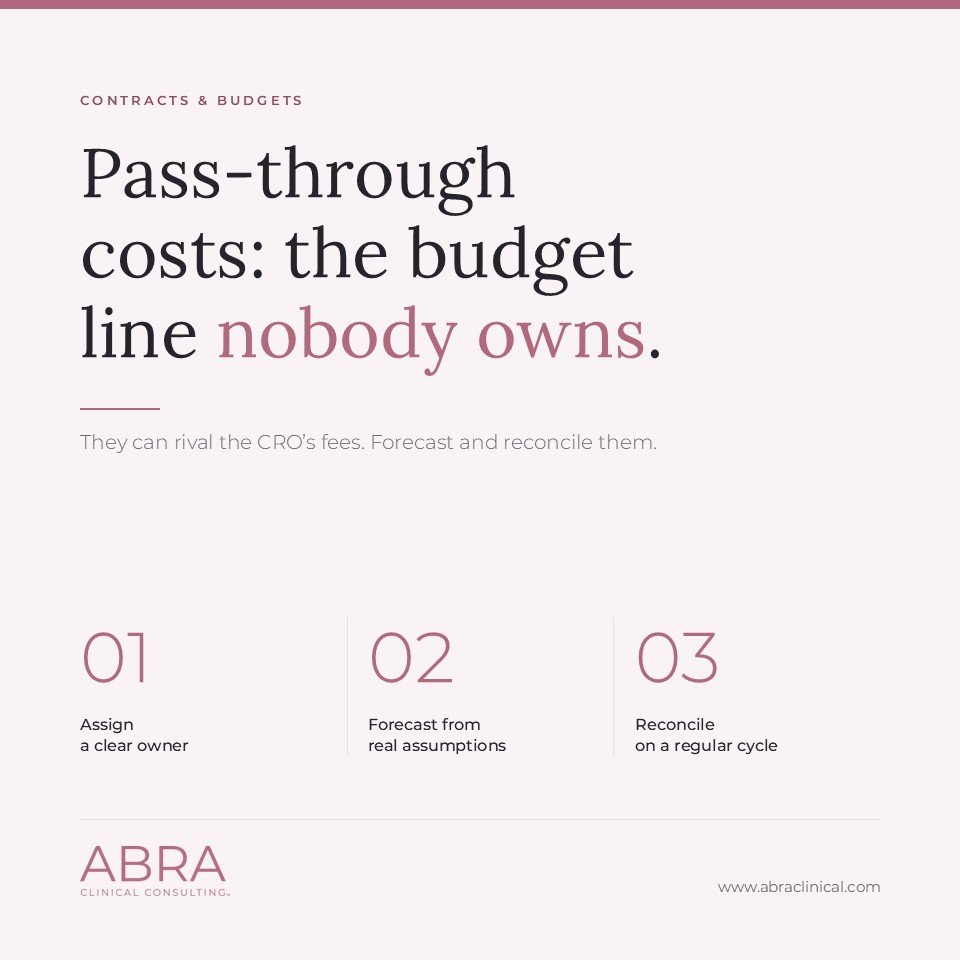
Pass-Through Costs: The Budget Line Nobody Owns
Pass-through costs, including investigator grants, site fees, laboratory kits, ethics review fees and participant reimbursement, can equal or exceed the CRO's service fees. Yet in many studies no one clearly owns forecasting, approving and reconciling them. The fix is to manage pass-through costs as a budget in their own right, with an owner, a forecast and a regular reconciliation.
Per-participant and startup payments to sites, close-out fees, ethics committee fees, central laboratory kits and shipping, participant travel and stipends, translations, couriers, investigator meeting costs and, depending on the contract…
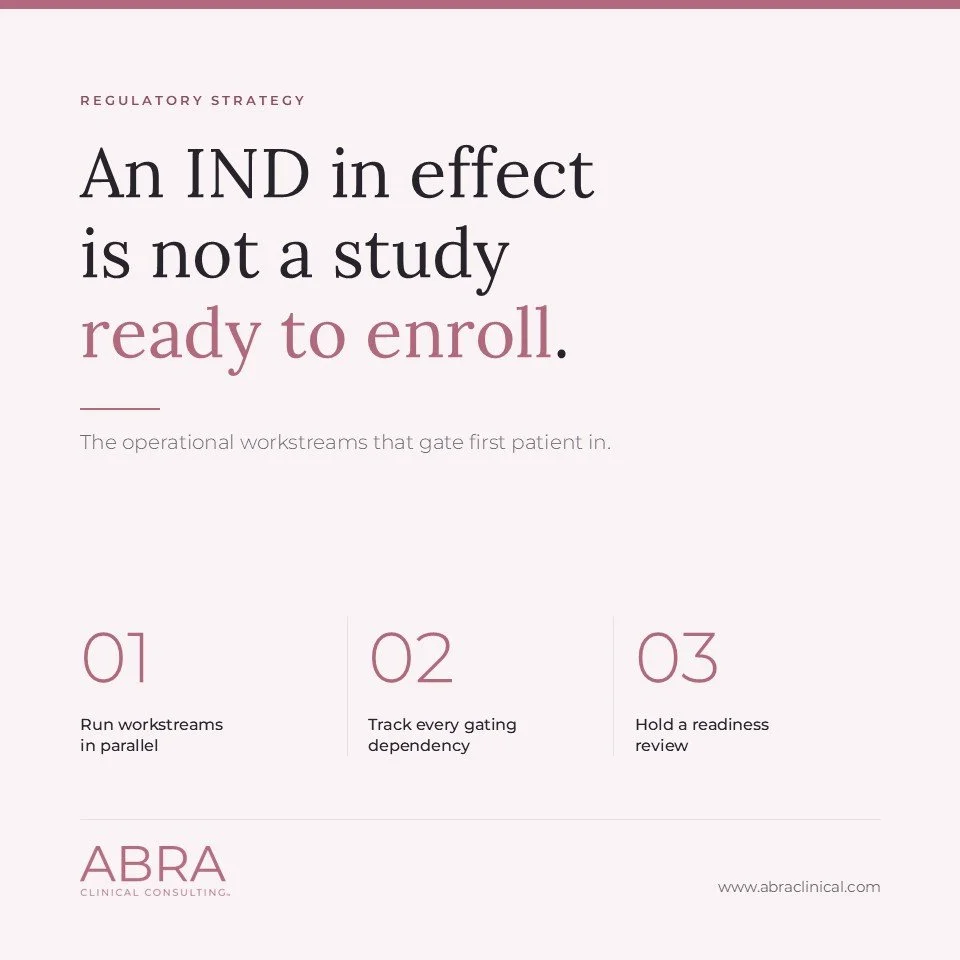
IND Readiness: The Operational Workstreams That Gate First Patient
An IND goes into effect 30 days after FDA receives it unless the agency places the study on clinical hold. That milestone matters, but it is not the same as being ready to dose a first participant. First patient in depends on a set of operational workstreams that need to run in parallel, often starting well before the IND is submitted.
Emerging sponsors frequently plan to the IND and then discover that drug supply, site contracts and system builds still have…
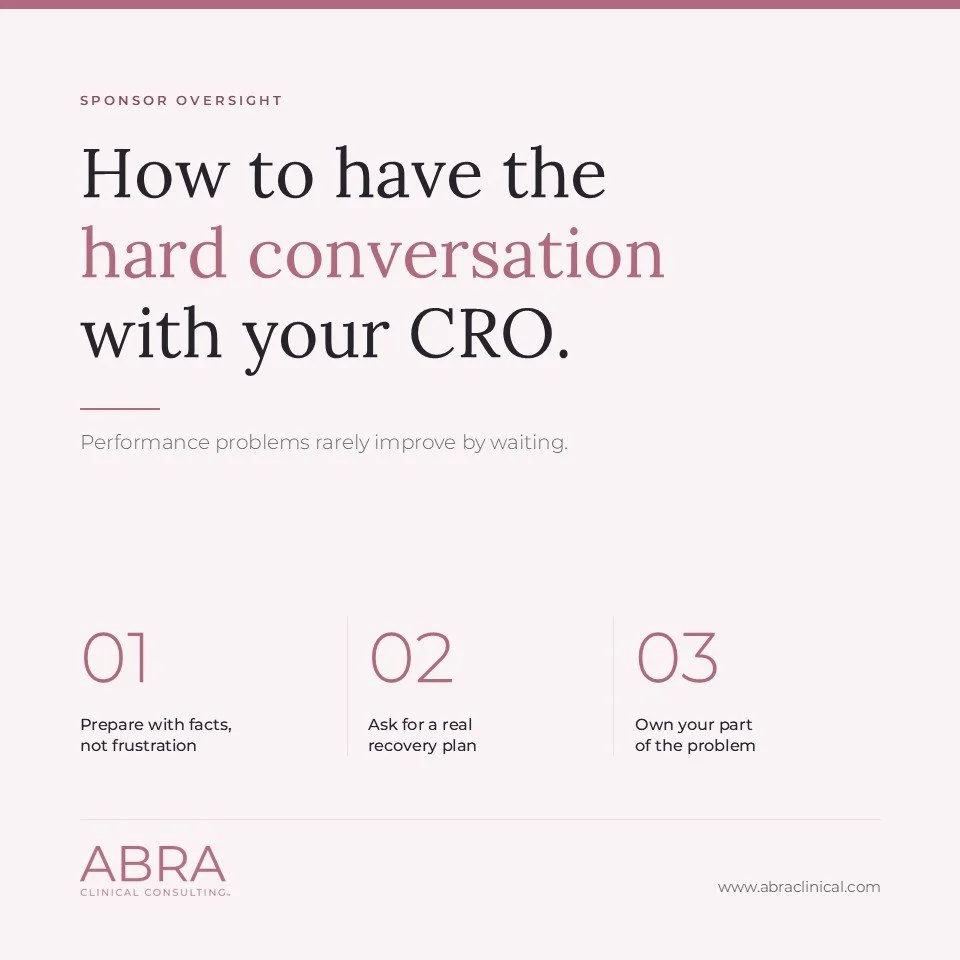
How to Have the Hard Conversation With Your CRO
The best way to handle a CRO performance problem is to raise it early, specifically and privately first, with evidence and a clear ask. Waiting rarely helps. Problems compound, frustration builds, and by the time the conversation happens it is harder for everyone, including the CRO team that may not have realized how serious the issue had become.
In more than 25 years on both sides of the relationship, I have seen far more damage done by conversations that never happened than by conversations handled…

Bring Your Statistician In Before the Protocol Is Final
Biostatisticians should help shape the protocol before key design decisions are locked: endpoints, sample size, randomization, estimands and interim analyses. Those choices drive feasibility, budget, timeline and regulatory acceptability. Brought in late, a statistician inherits a design they can only document, not improve.
In emerging biotechs, statistics is often treated as an analysis function that arrives with the CRO. By then, the protocol synopsis has been circulated to investors, discussed with key opinion leaders and sometimes previewed with…
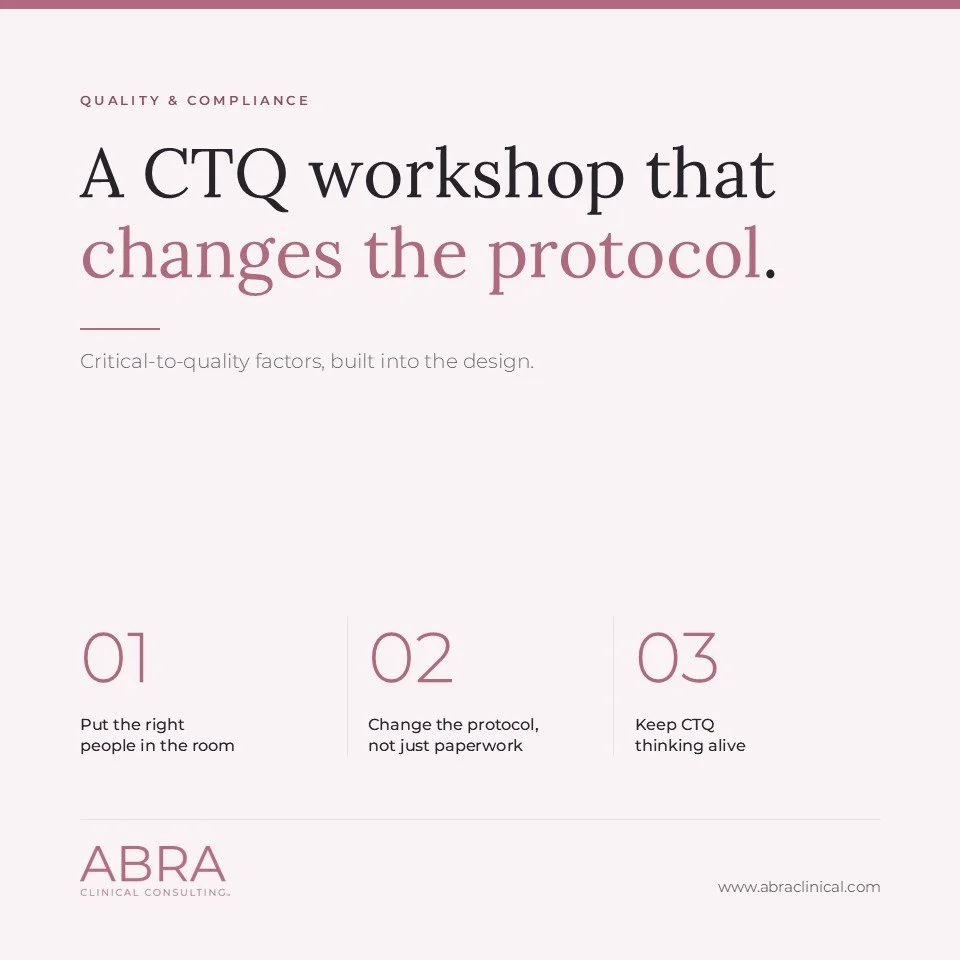
Running a Critical-to-Quality Workshop That Changes the Protocol
A good critical-to-quality workshop identifies the handful of factors that truly determine participant safety and the reliability of results, then changes the protocol and the oversight plan to protect them. If the protocol looks the same afterward, the workshop was a compliance exercise rather than quality by design.
ICH E6(R3) builds on the quality-by-design principles of ICH E8(R1) and asks sponsors to identify critical-to-quality factors prospectively. Most sponsors agree with the idea. Fewer run the conversation in a way that…
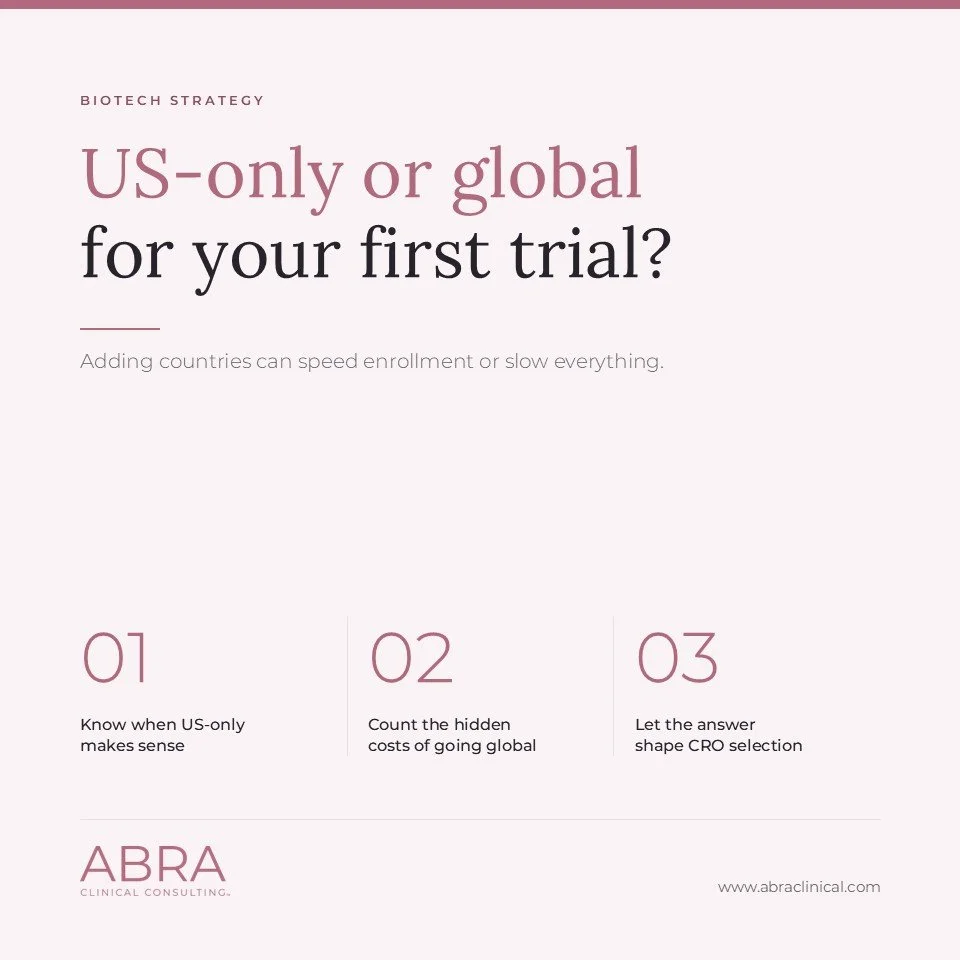
US-Only or Global for Your First Clinical Trial?
Whether your first trial should be US-only or multinational depends on where the patients are, your regulatory path, your budget and your team's capacity to manage complexity. Adding countries can widen enrollment reach. It also adds regulatory submissions, vendors, drug supply logistics and oversight burden. Many emerging sponsors underestimate the second half of that equation.
When the indication has ample patients in the US, the study is a small Phase 1 or 1b, the internal team is lean, and the sponsor's immediate priority is…
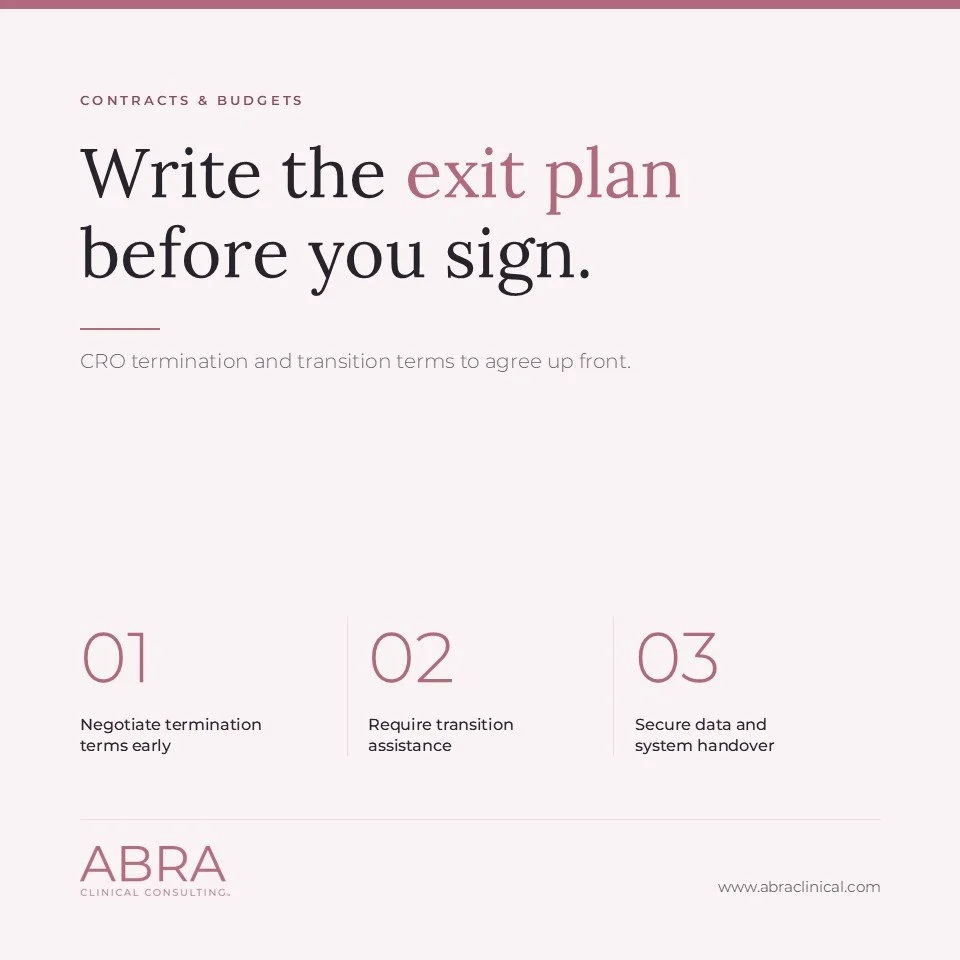
Write the Exit Plan Before You Sign the CRO Contract
The best time to plan how a CRO relationship ends is before it begins. Termination rights, transition assistance, data and document return and wind-down costs are far easier to negotiate at signature, when leverage is highest and the relationship is cordial, than in the middle of a dispute or a sudden program decision.
Nobody enjoys planning for an ending during the excitement of a new partnership. But studies stop or change hands for many reasons that have nothing to do with…