
Blog
The Oversight
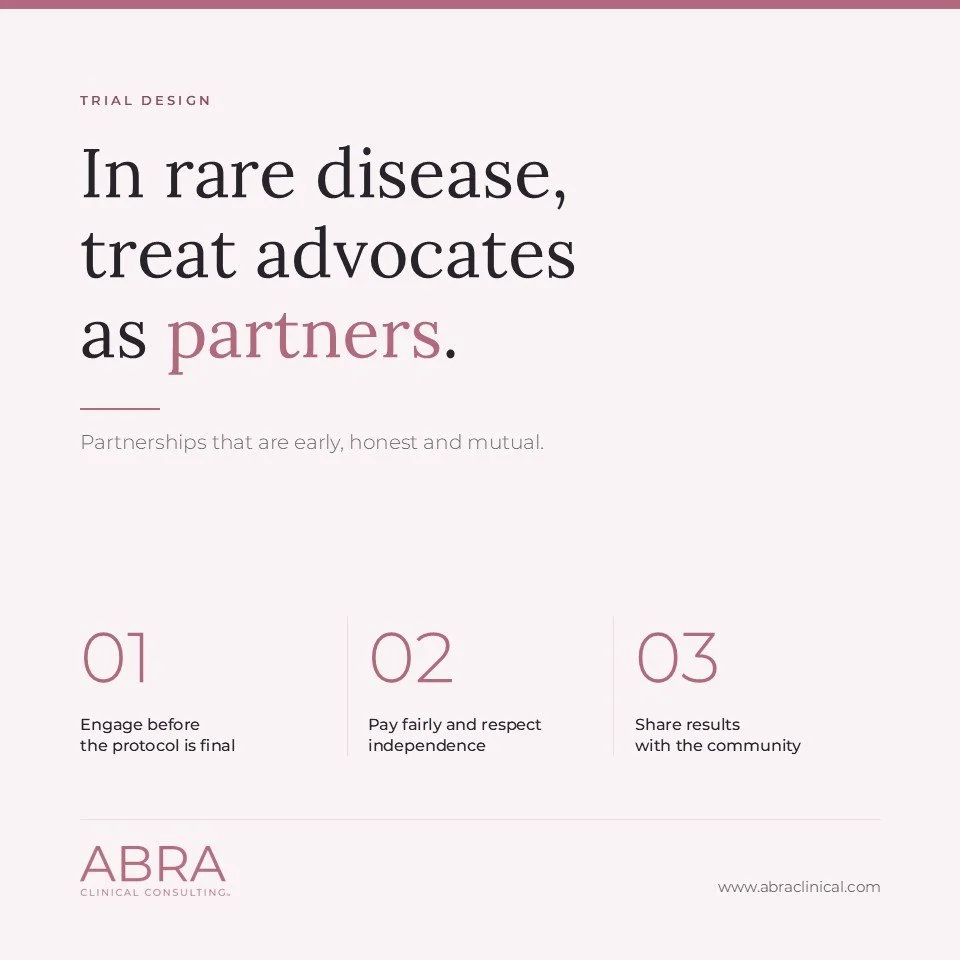
Partnering With Patient Advocacy Groups in Rare Disease Trials
In rare disease, patient advocacy groups often know more about daily life with the condition than anyone else in the room, and they hold the trust of the community a sponsor hopes to enroll. The partnerships that work start early, before the protocol is final, are honest about uncertainty, compensate advocates fairly for their time and expertise, and keep the relationship going after the study ends. Treating advocacy groups as a recruitment channel misses most of their value and can damage trust for years…
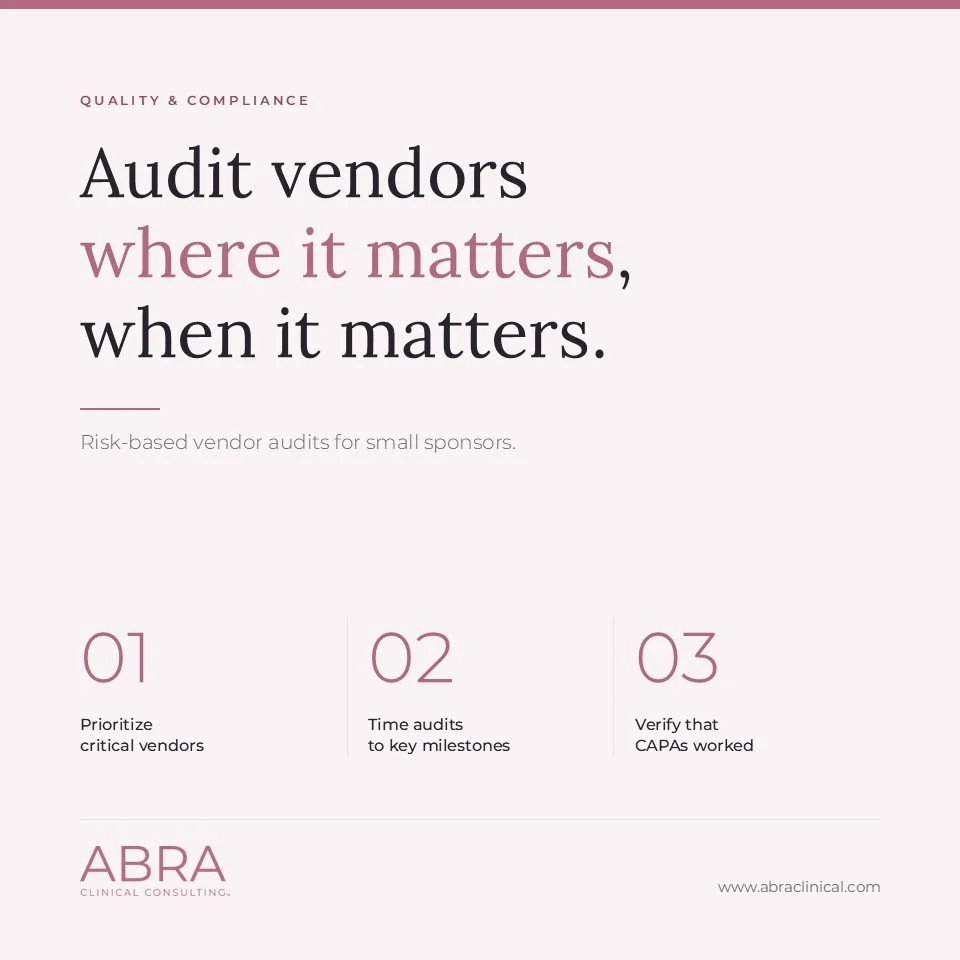
Risk-Based Vendor Audits: When and What to Audit
A risk-based audit program focuses limited resources on the vendors and processes that matter most to participant safety and data reliability, and times audits to when they can change outcomes. For most small sponsors, that means auditing critical vendors at qualification, early in the study, before key milestones such as database lock and whenever risk signals appear, and then making sure findings lead to effective corrective action…
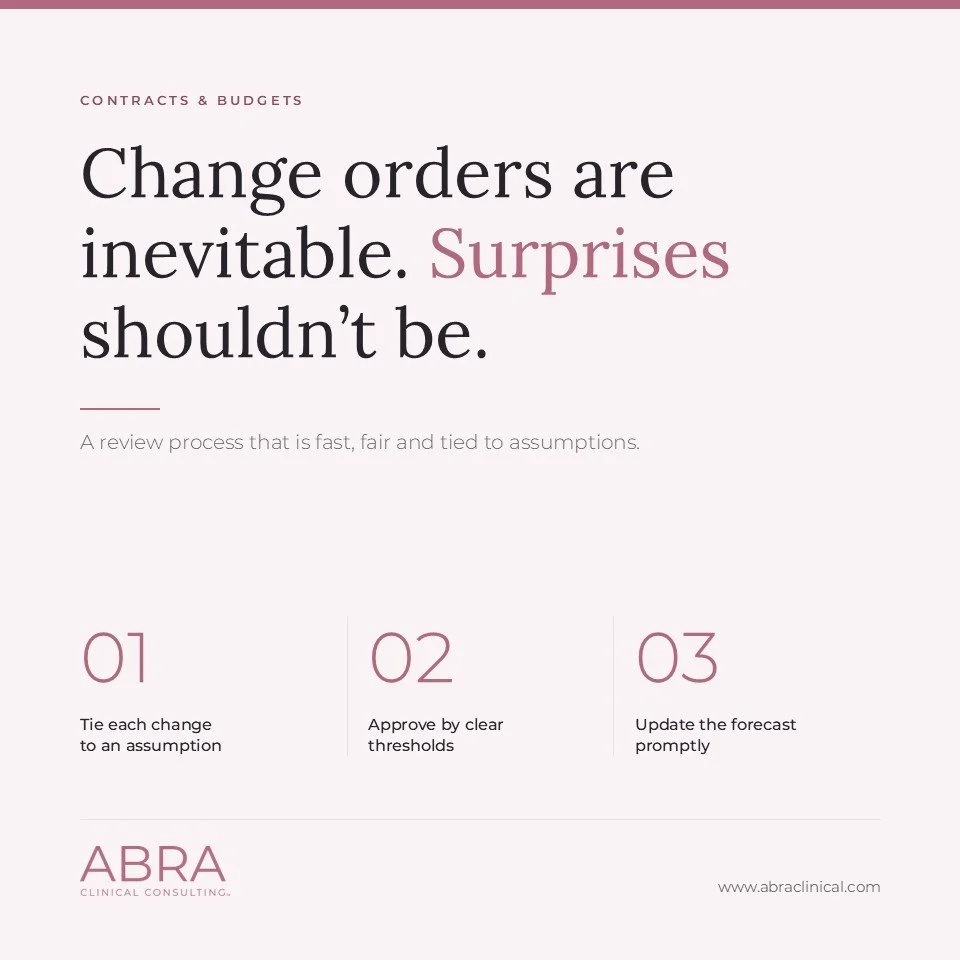
Running a Change Order Review Process That Works
A good change order process surfaces changes early, ties each one to a specific scope or assumption change in the contract, evaluates it quickly against agreed rates and routes approval to the right authority level. It prevents both surprise invoices and stalled work, and it keeps the sponsor's forecast honest.
Why do change orders cause so much friction? They surface late, sometimes after the work is done. Their causes are unclear. Several changes are bundled together, making each hard…
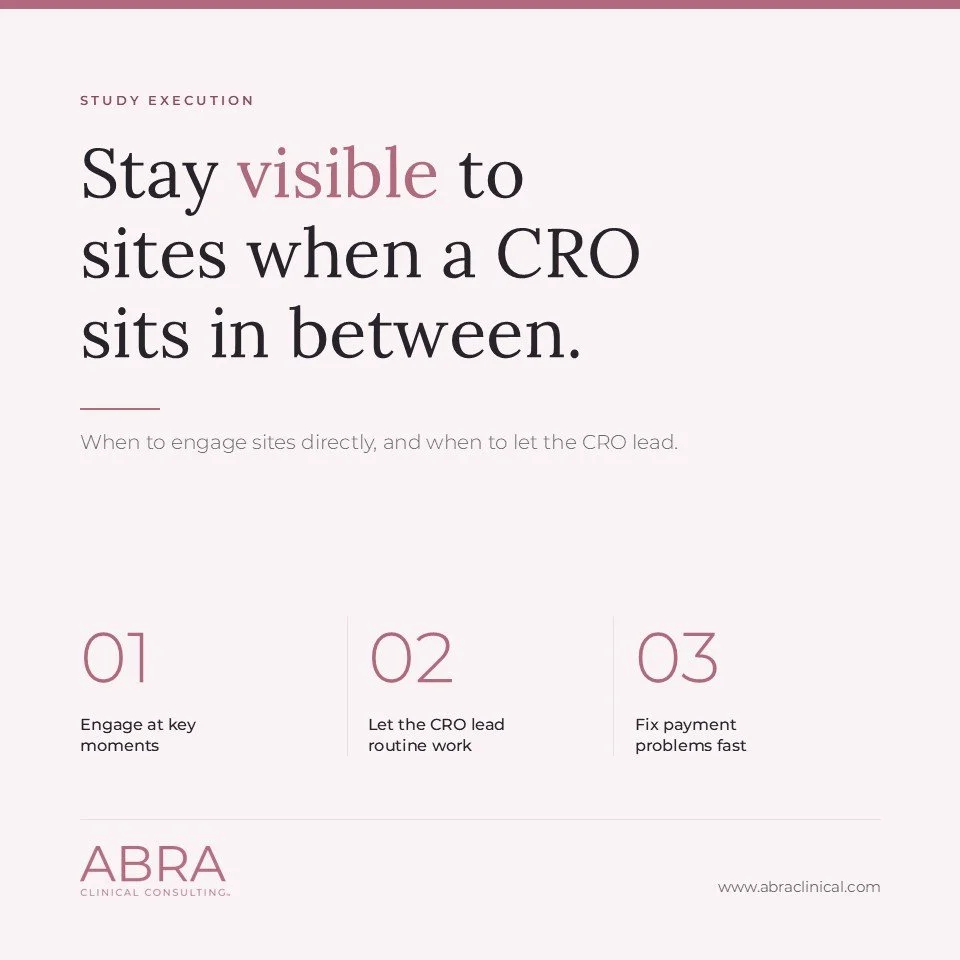
The Sponsor's Role in Site Relationships When a CRO Sits in Between
Even when a CRO manages sites day to day, sponsors should engage directly at key moments: investigator selection, study kickoff, scientific and medical questions, check-ins with key sites, recognition and results sharing, and escalation of site concerns. The CRO should lead monitoring and routine operations. The art is in staying visible without creating confusion about who sites should talk to.
Investigators value a direct connection to the people…
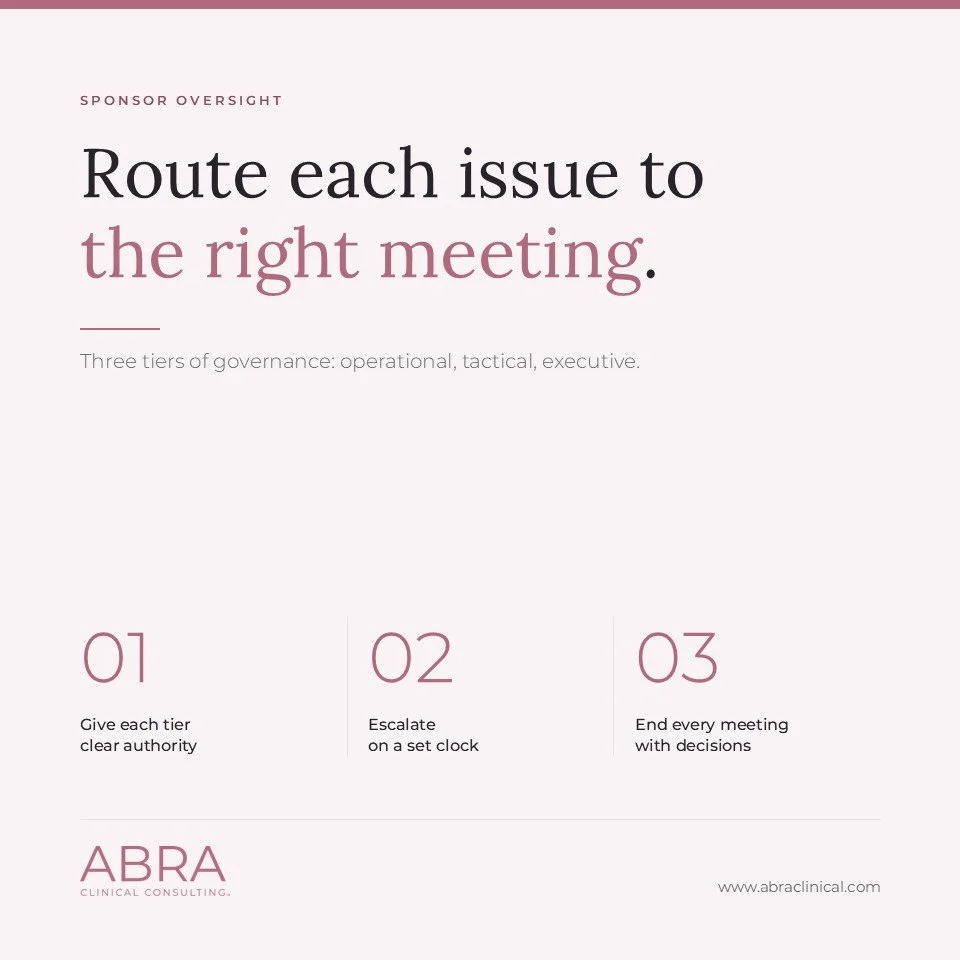
Three Tiers of Governance: Operational, Tactical and Executive
A three-tier governance model, with operational, tactical and executive levels, routes each issue to the people with the authority to resolve it and moves unresolved issues up quickly through time-boxed escalation. It keeps executives out of the weeds and keeps study teams from waiting weeks for decisions that should take days.
When every issue lands in the same meeting, one of two things happens. Executives spend their time on…

Matching Clinical Milestones to Your Runway
A clinical plan whose key readout lands after the money runs out is not a plan. Emerging biotechs align milestones with runway by defining the value-inflection readout precisely, modeling the timeline with realistic and downside scenarios, mapping cash burn to the activities that drive it, keeping a meaningful buffer beyond the readout and deciding in advance which levers they would pull if the math doesn't work.
Timelines are built optimistically. Costs are back-loaded, with large site and data management expenses…
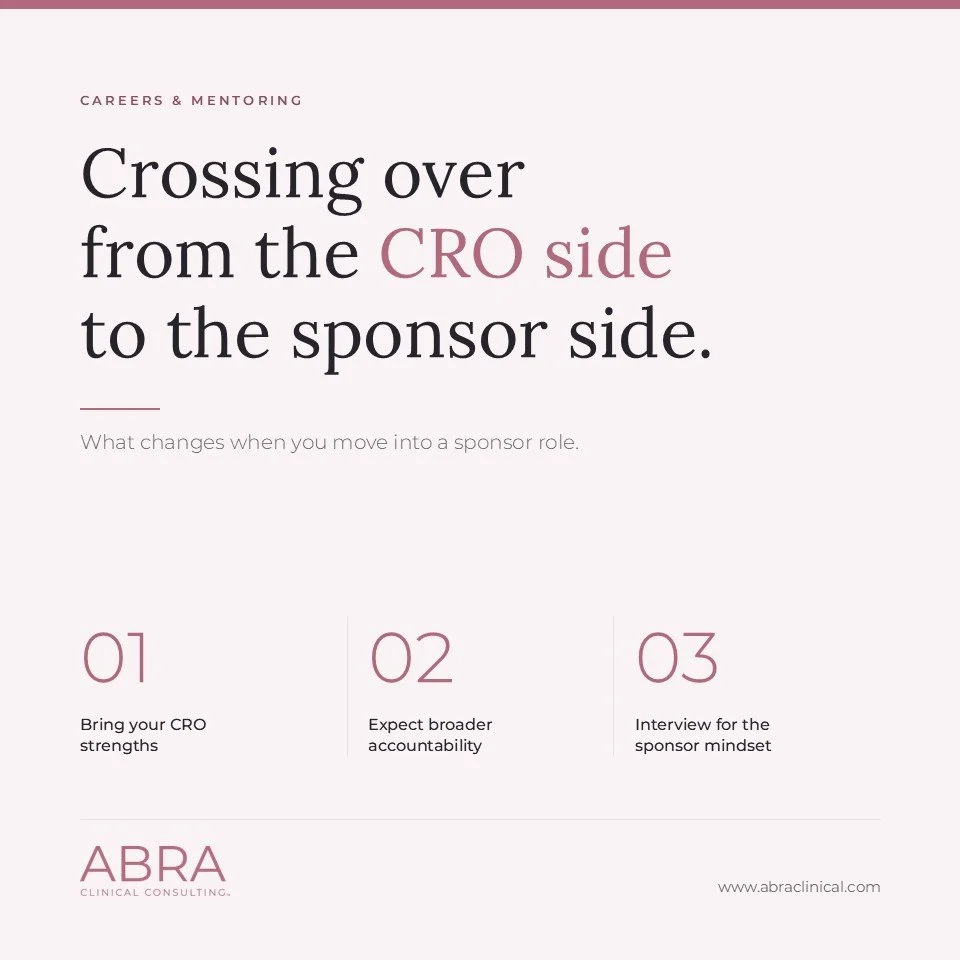
Crossing Over: Moving From the CRO Side to the Sponsor Side
CRO experience is genuinely valuable on the sponsor side: execution know-how, vendor and site knowledge and process discipline all transfer. But the job changes in a fundamental way. On the CRO side, you deliver a defined scope. On the sponsor side, you own the outcome, often with broader decisions, more ambiguity, fewer resources and responsibility for overseeing work you used to do yourself.
Having spent more than 25 years working across both sides of the relationship, I have watched…

What US Biotechs Should Know About the EU Clinical Trials Regulation
Adding sites in the European Union means operating under the EU Clinical Trials Regulation, Regulation (EU) No 536/2014, which has applied since January 2022. Since the transition period ended in early 2025, trials in the EU run under the CTR, with applications submitted through the Clinical Trials Information System. US sponsors need to plan for a single coordinated application, fixed response deadlines, broad transparency and, in most cases, a legal representative in the EU.
What changed under the CTR? The CTR replaced a patchwork of national processes with a single portal, CTIS, and a single…

ICH E8(R1) Is the Other Half of E6(R3)
ICH E6(R3) gets most of the attention, but ICH E8(R1), the guideline on general considerations for clinical studies finalized in 2021, explains where quality begins. E8(R1) describes quality by design: identifying what matters most, engaging stakeholders and building studies that are fit for purpose. E6(R3) describes how that quality is protected during conduct. Sponsors who read one without the other miss half the picture.
What is ICH E8(R1)? It is a modernized guideline covering the general principles of clinical study design and planning across…
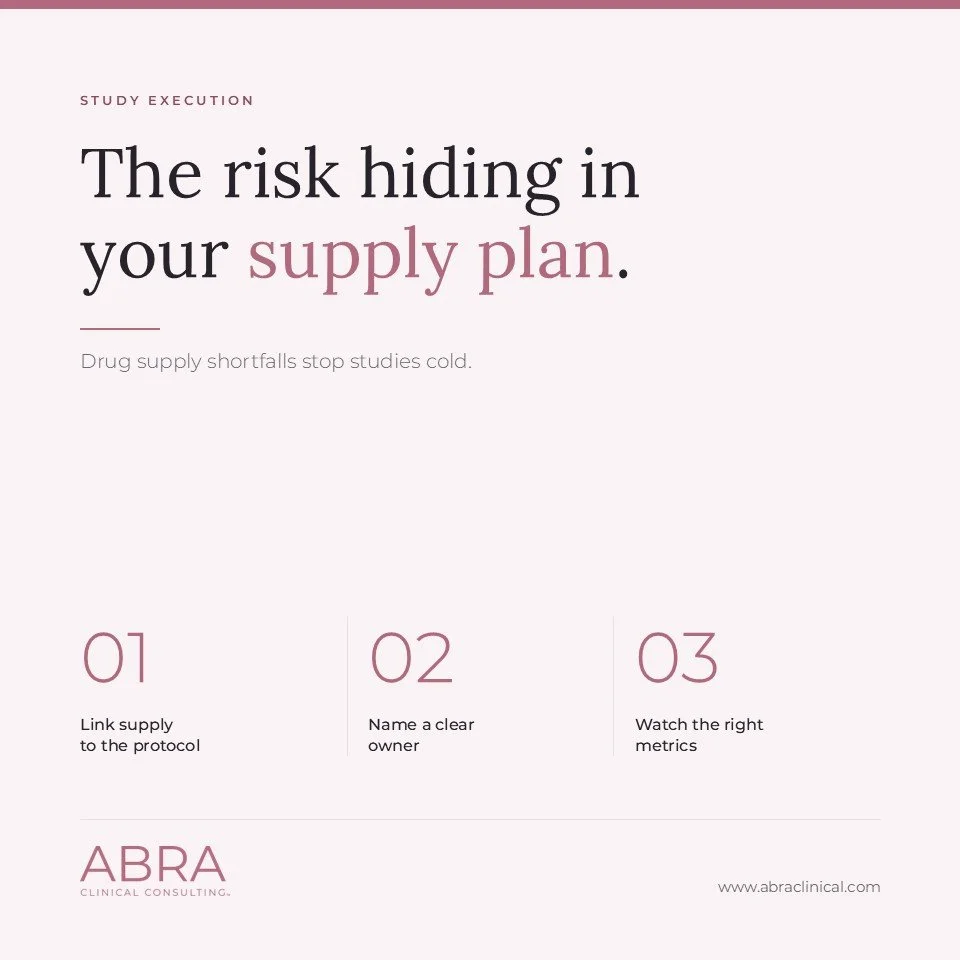
The Risk Hiding in Your Clinical Supply Plan
Investigational product supply is one of the most underestimated risks in early clinical development. The risk hides in manufacturing lead times, release testing, short expiry dating, country-specific labeling, import requirements, depot setup, resupply settings and temperature control. Sponsors avoid surprises by planning supply early, tying forecasts to enrollment scenarios and giving one person clear ownership.
Where does clinical supply go wrong?…
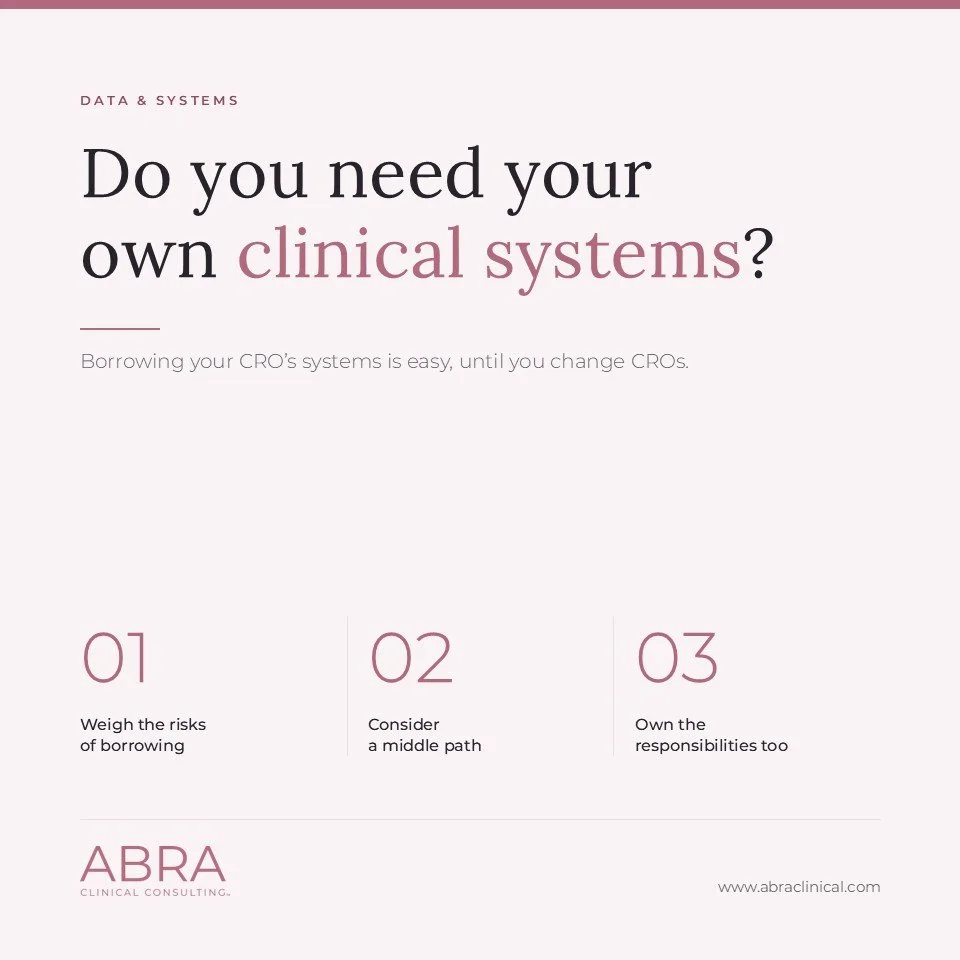
Do You Need Your Own Clinical Systems?
Whether a sponsor should own or license its own clinical systems depends on how many studies it plans, how likely it is to work with more than one CRO, how much direct access it needs to its data and documents, and whether it has the capacity to manage systems. Using a CRO's systems is efficient for a single study. Owning key systems gives continuity across studies and vendors, but brings responsibilities a small team must be ready to carry…
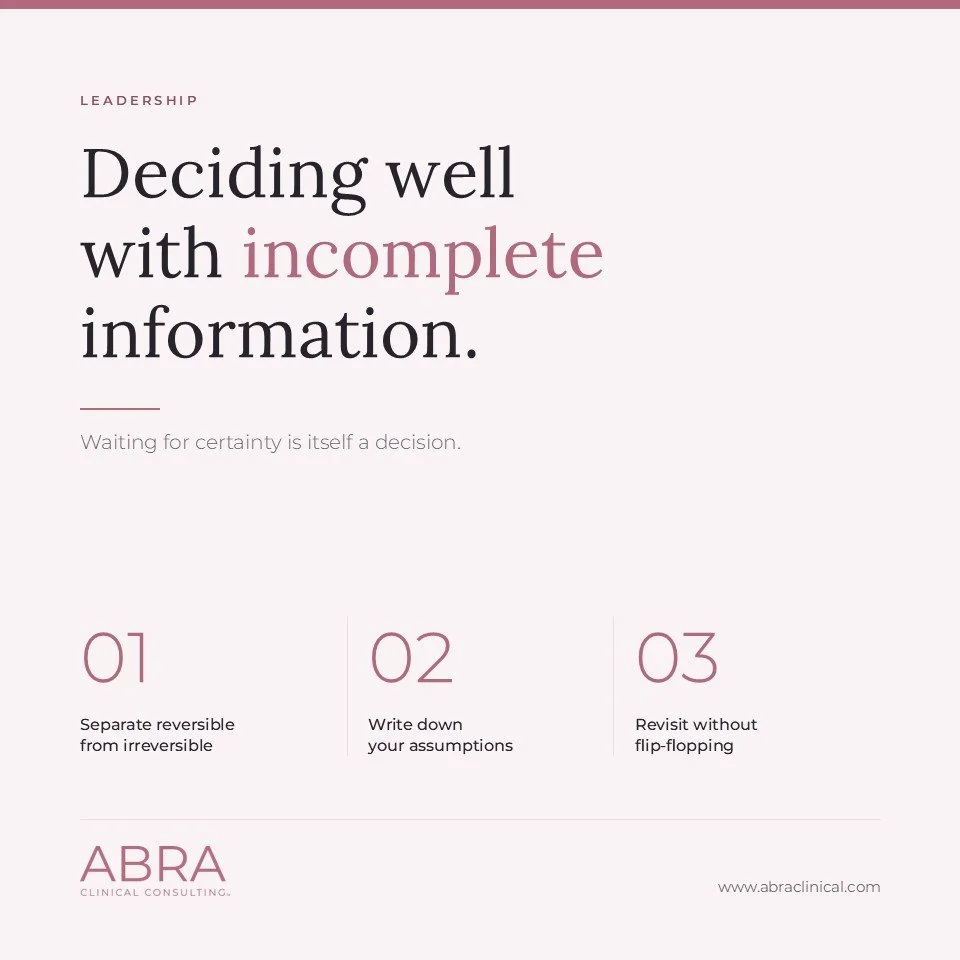
Making Good Decisions With Incomplete Information
Clinical operations leaders rarely have complete information when a decision is due. Good decisions under uncertainty come from framing the decision and its deadline, separating reversible choices from irreversible ones, identifying the few facts that would actually change the answer, documenting assumptions and agreeing in advance what would prompt a second look.
In clinical development, delay has costs: enrollment that doesn't happen, vendors waiting for…
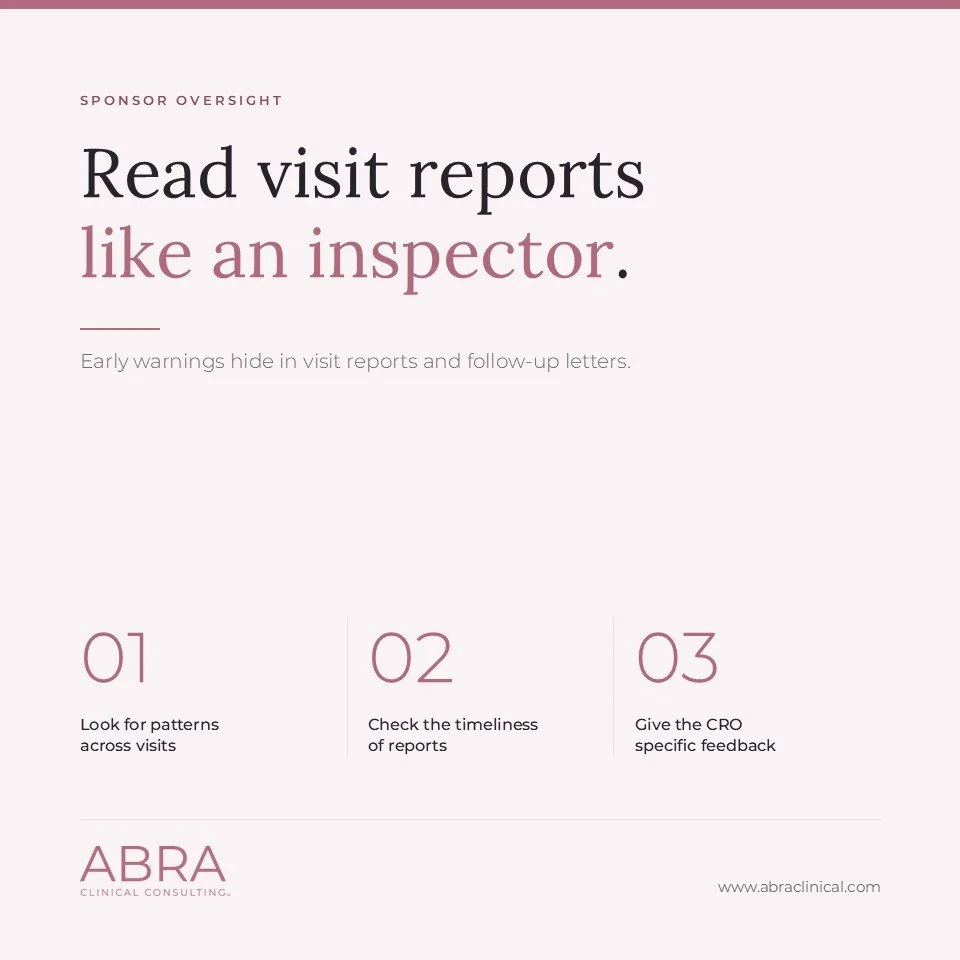
Reading a Monitoring Visit Report Like an Inspector
Sponsors should read monitoring visit reports for patterns rather than isolated events: recurring findings, aging action items, signs of site strain, consent and investigational product issues, and any mismatch between what the report says and what the data show. Reviewing a risk-based sample of reports regularly, and tracking follow-up, is one of the most practical forms of sponsor oversight.
Typically the visit details, source data review and verification performed, findings, protocol deviations, consent review, investigational product accountability, site staffing and facilities, action items and…
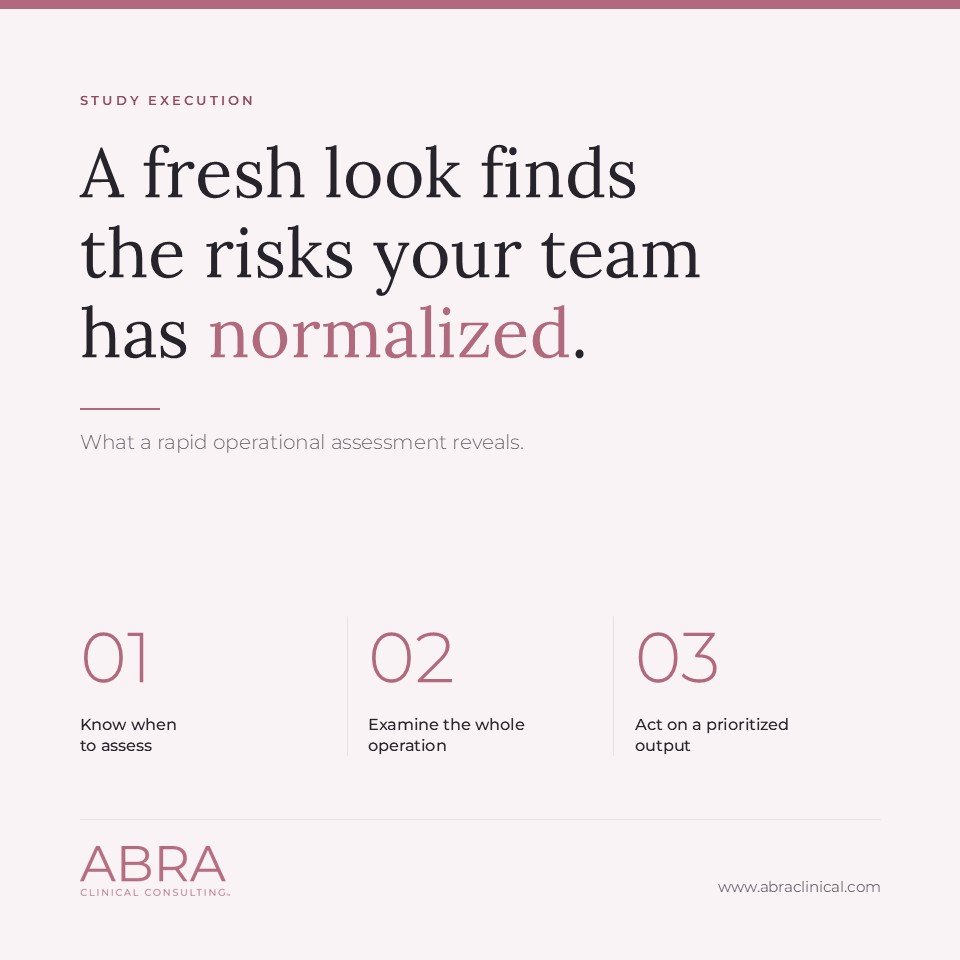
What a Rapid Operational Assessment of a Running Study Reveals
A rapid operational assessment is a structured, time-boxed review of a running study's plan, performance, vendor management, risks and governance, conducted by someone outside the day-to-day work. Its value lies in surfacing risks the team has normalized and turning them into a short, prioritized set of actions. Done well, it takes weeks, not months, and changes the trajectory of a study.
Before a financing round or board milestone that depends on the study. When new leadership inherits…
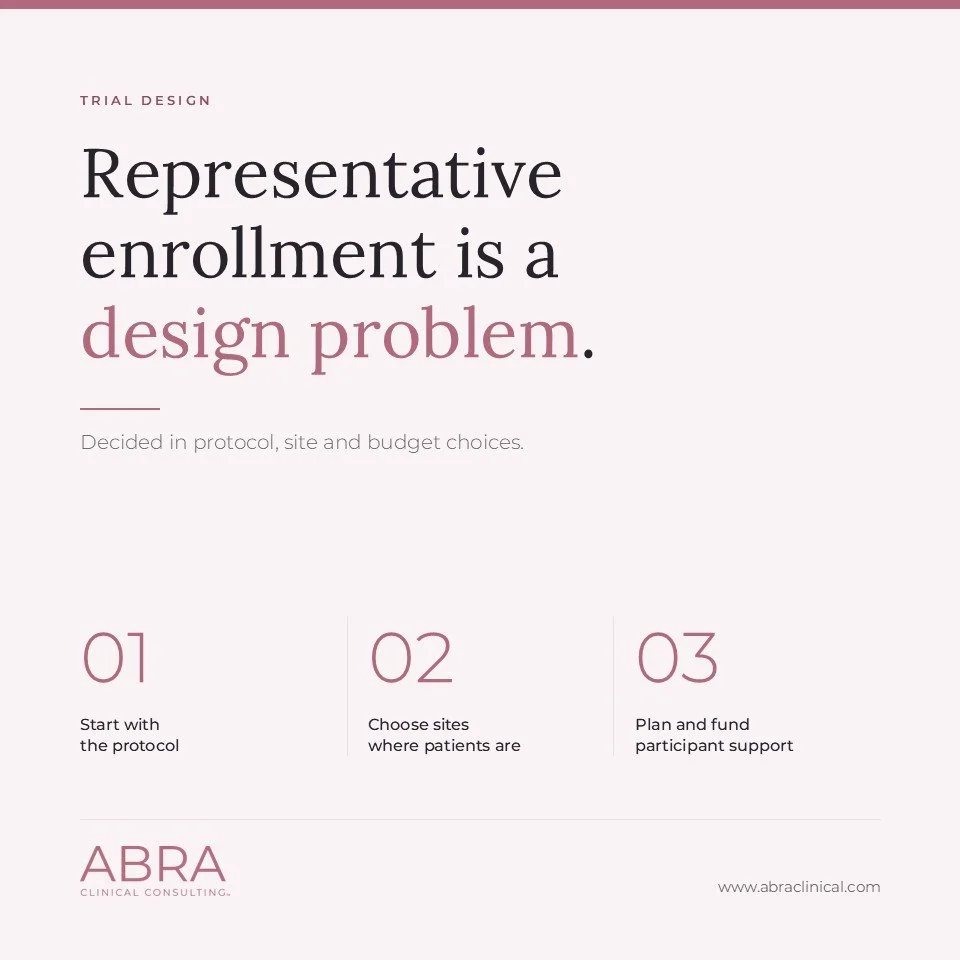
Representative Enrollment Is an Operational Design Problem
Whether a trial enrolls a population that reflects the people who live with the disease is largely decided before recruitment begins. Eligibility criteria, visit burden, site locations, investigator networks, participant support budgets and language access all shape who can realistically take part. Representative enrollment is an operational design problem, and it is best solved at the design stage…
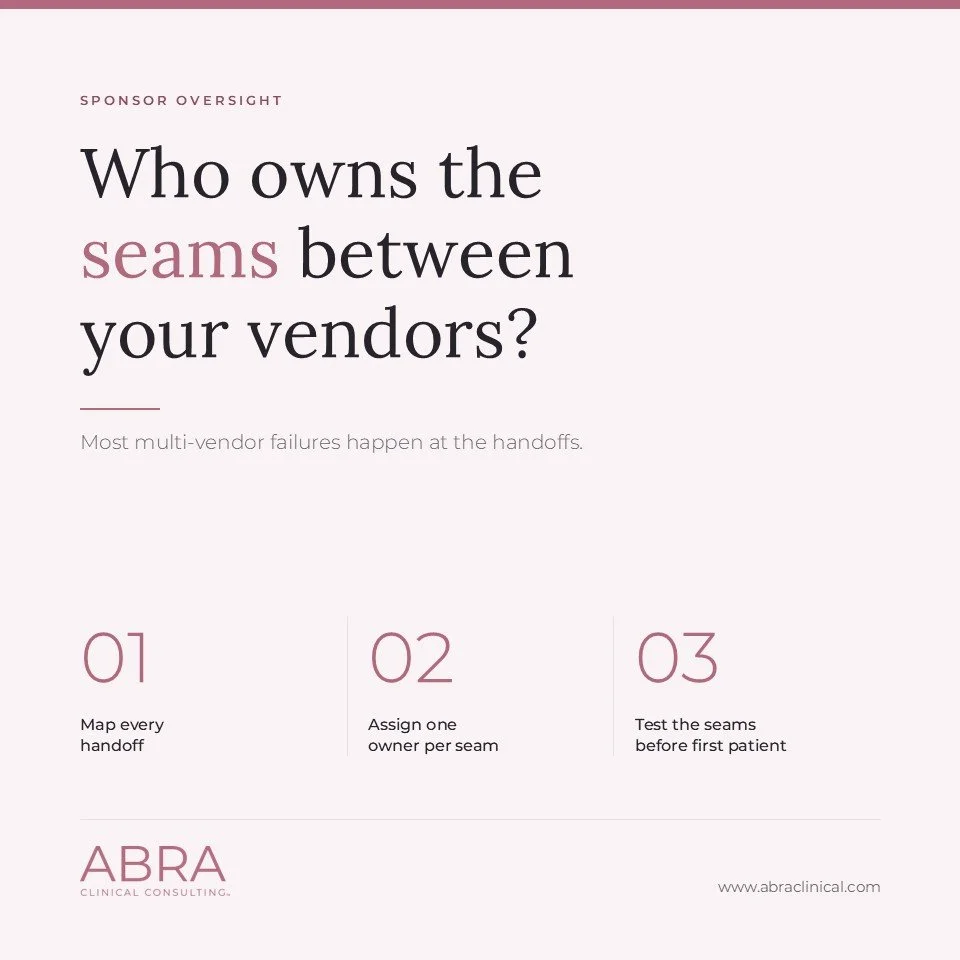
Who Owns the Seams Between Your Vendors?
Most multi-vendor failures happen at the seams: the handoffs between a CRO and a laboratory, between randomization and drug supply, between the safety database and the clinical database. Each vendor can perform its own scope well while the study still breaks between them. The fix is to give every seam a single owner, a written interface definition and a place in governance.
Where are the seams in a typical study?…
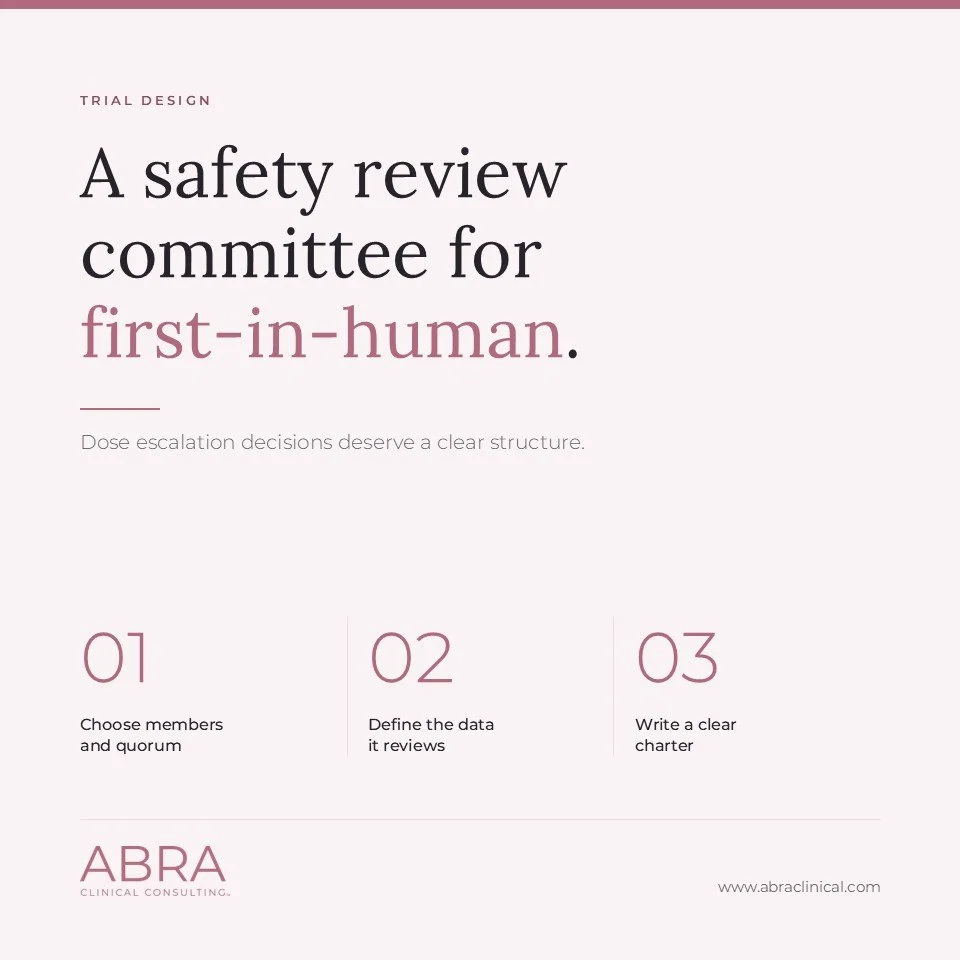
Setting Up a Safety Review Committee for First-in-Human
A safety review committee for a first-in-human trial reviews accumulating safety, pharmacokinetic and other data at predefined points to decide whether to escalate the dose, repeat a dose level, expand a cohort, pause or stop. It works well when a written charter defines membership, data, decision rules, timing and documentation before the first participant is dosed.
A safety review committee typically includes sponsor medical leadership and investigators and makes dose escalation decisions in…
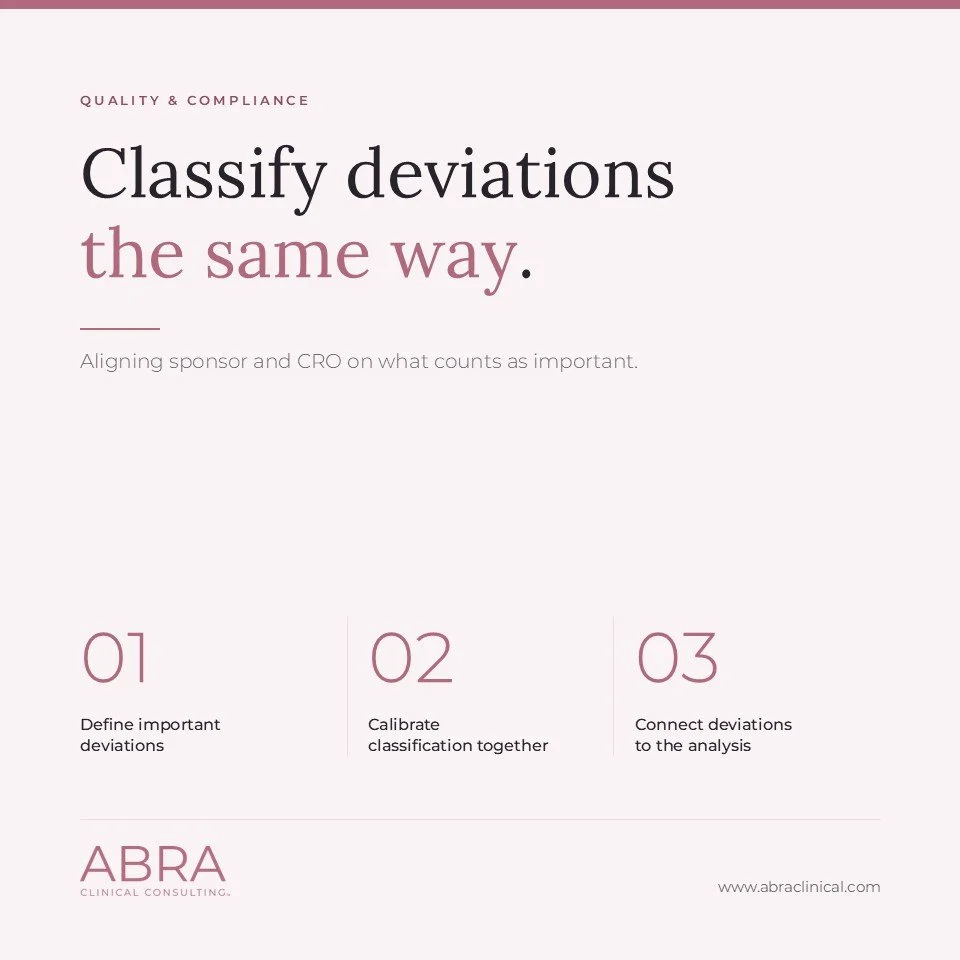
Protocol Deviations: Getting Sponsor and CRO to Classify the Same Way
Sponsors and CROs classify protocol deviations consistently when they agree up front on definitions, use a protocol-specific guide with examples tied to critical-to-quality factors, follow one review process and calibrate their judgments regularly. Without that alignment, deviation data become noise: important issues hide among trivial ones, trends go unseen and corrective action is inconsistent.
Sponsor and CRO SOPs define categories differently. Individual monitors apply…
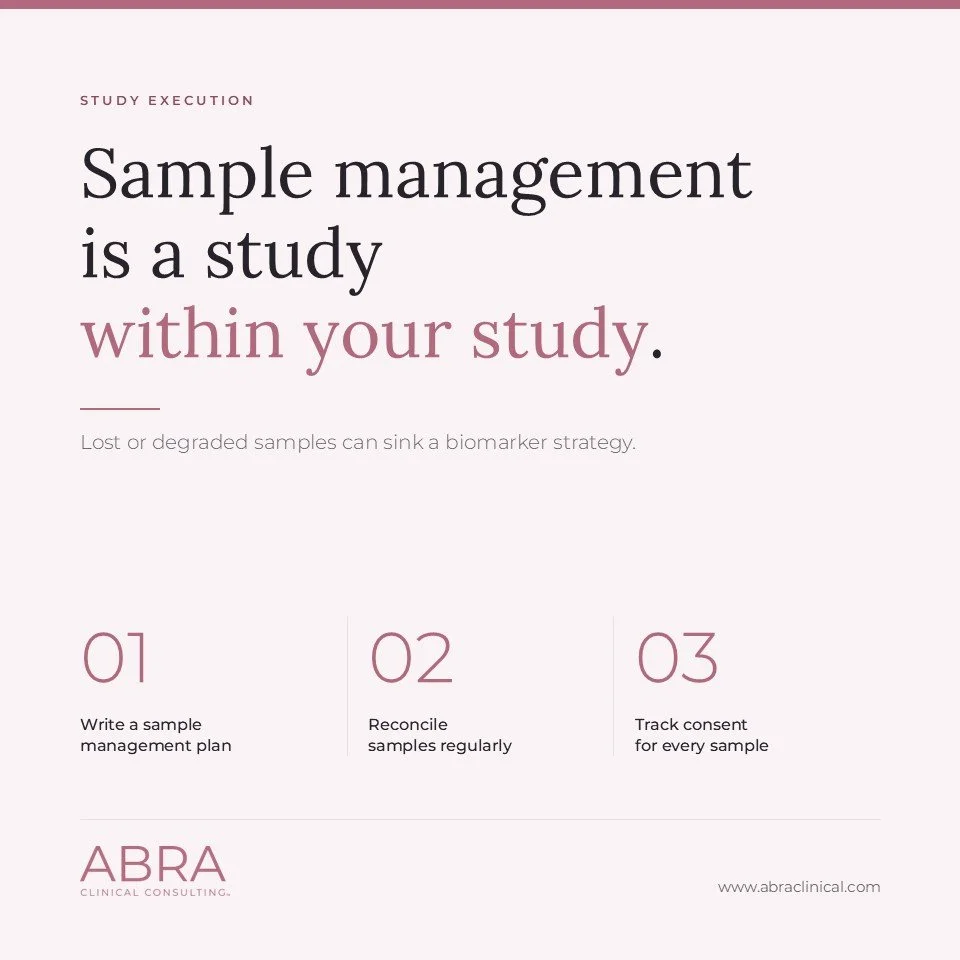
Sample Management Is a Study Within Your Study
Biological sample management, covering collection, processing, labeling, shipping, storage, chain of custody, analysis, reconciliation and consent tracking, behaves like a separate study running inside your trial. When it fails through hemolyzed samples, temperature excursions, mislabeling or missing consent for future use, it can undermine pharmacokinetic and biomarker endpoints that the whole program depends on.
Samples pass through many hands…
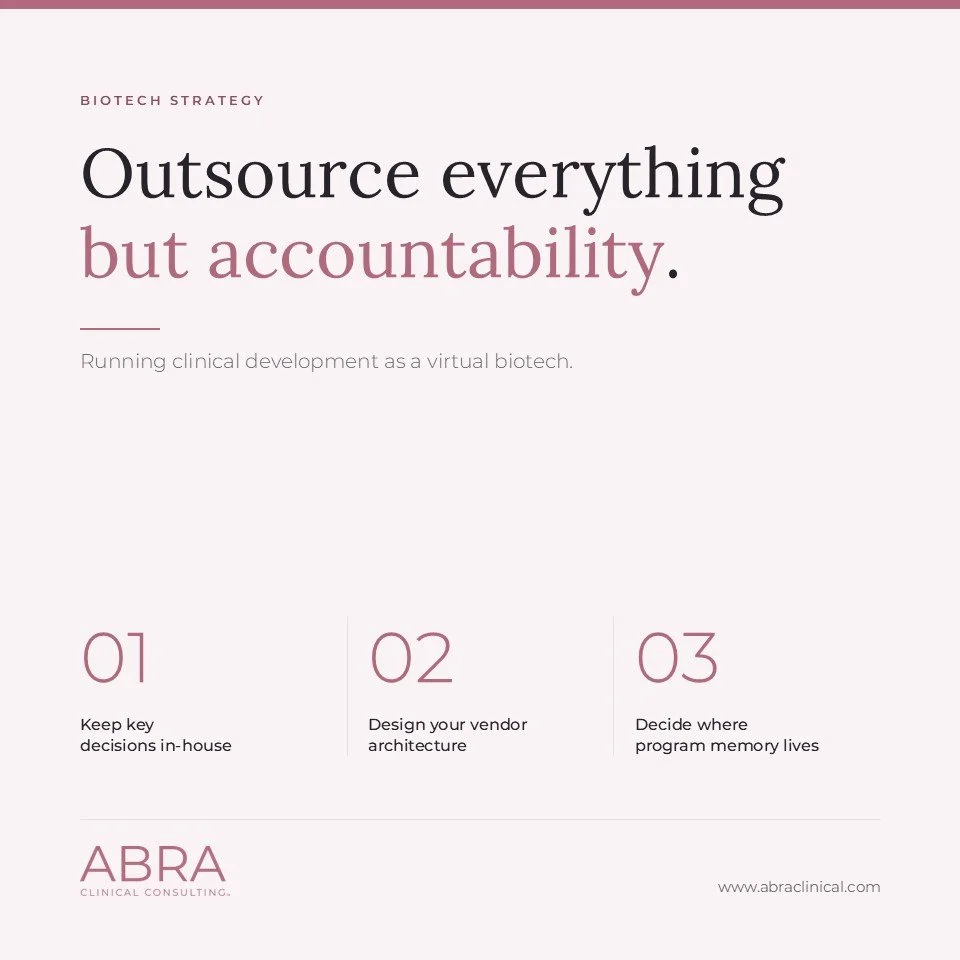
Running Clinical Development as a Virtual Biotech
A virtual biotech can outsource nearly all of its execution, but it cannot outsource strategy, decisions, accountability or the work of integrating its vendors into one program. Virtual companies succeed when a small core team owns those things deliberately, with clear decision rights, a thoughtful vendor architecture and governance that keeps everyone pointed at the same milestone…