
Blog
The Oversight

The Promotion Nobody Prepares You For: CRA to Clinical Project Manager
The clinical research industry promotes its strongest monitors into project management and then acts surprised when some of them struggle. The two roles share a vocabulary and almost nothing else.
A clinical research associate succeeds through precision, independence, and depth on a defined set of sites. The feedback loop is short and the standard of performance is legible: findings are documented correctly or they are not. A clinical project manager succeeds through…

The Hidden Cost of Choosing the Wrong CRO
The protocol was elegant. The science was sound. On paper, the Phase 1/2 program looked like it would move cleanly from first patient in to meaningful signal.
But somewhere between kickoff and execution, things began to drift—missed milestones explained away in status calls, familiar faces replaced by new ones, metrics that looked reassuring but said very little. No single moment of failure. Just a slow unraveling…

The Weight of CRO Selection
For an emerging biopharma/biotech, the decision of which CRO you select carries a weight it doesn’t at a large pharma. You likely have one shot at the program, a small team, and a runway that doesn’t forgive a misstep. How you select a partner matters as much as which partner you select.
Many sponsors still treat this activity as procurement, but it's worth it to turn a one-time activity into a strategic capability — building the muscle to choose well, again and again, not just once.
Four moves you can make…

CRO Oversight Is a Leadership Skill, Not an Administrative One
Sponsor oversight of contract research organizations gets treated as a compliance exercise in far too many organizations. Someone builds an oversight plan, populates a metrics dashboard, schedules a monthly governance call, and files the minutes. The regulatory box is checked. The oversight is not real.
Genuine oversight is a leadership function because…

Building a Clinical Operations Leadership Bench at a Small Biotech
A twelve-person biotech running its first trial has no leadership bench. It has a VP of Clinical Development, possibly a clinical operations director, and a CRO. That structure gets a Phase 1 study executed. It does not survive the transition to a multi-study program.
The failure point is predictable. When the second and third studies start…

Why Clinical Research Leadership Is Not the Same as General Management
Most leadership advice assumes a stable operating environment. Clinical research does not offer one. A clinical operations leader manages a program whose timeline is governed by enrollment behavior they cannot control, whose quality standards are set by regulators they do not report to, and whose execution runs through vendors who work for a different employer.
That combination produces a leadership problem with no clean corporate analogue. The clinical project leader carries accountability for…
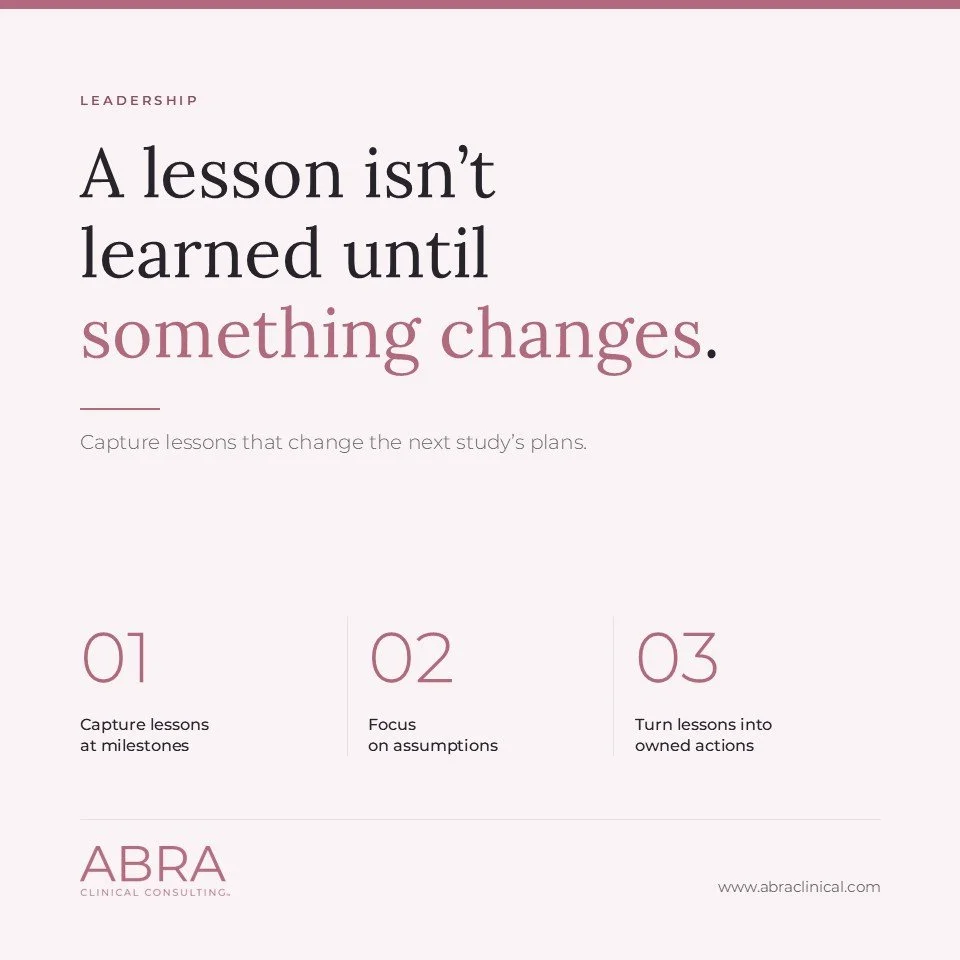
Lessons Learned That Actually Change the Next Study
Most lessons-learned exercises produce a document that nobody reads before the next study. Lessons that actually change practice are captured throughout the study, not just at the end, focus on decisions and assumptions rather than complaints, include the CRO and sites, and are turned into specific changes in protocols, plans, templates, budgets and contracts, each with an owner. A lesson isn't learned until something is done differently…
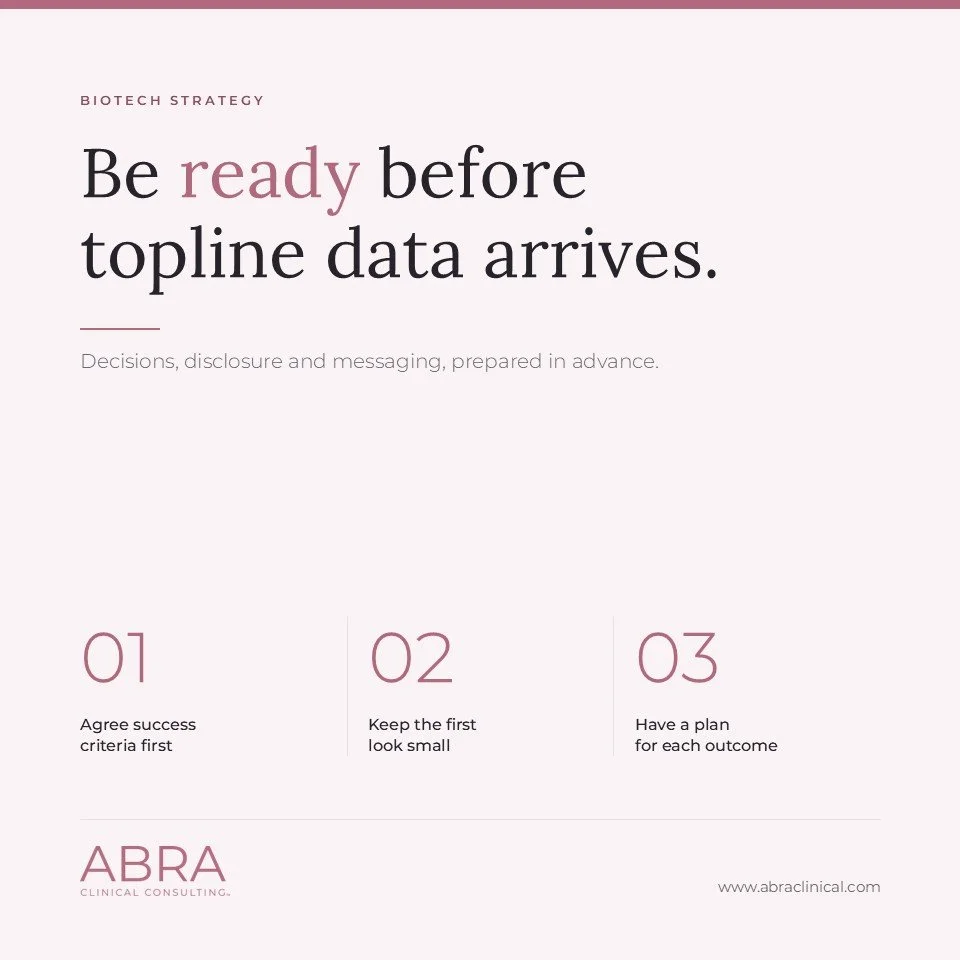
Topline Readiness: Preparing for the Day the Data Arrives
The day topline results arrive is not the day to decide what they mean or who should hear about them. Topline readiness means agreeing in advance on what the results need to show, which decisions follow from each possible outcome, who sees the data first and in what order, how the results will be checked, and how they will be communicated to the board, investors, investigators, participants and, where required, the public. Preparation turns a chaotic day into a disciplined one…
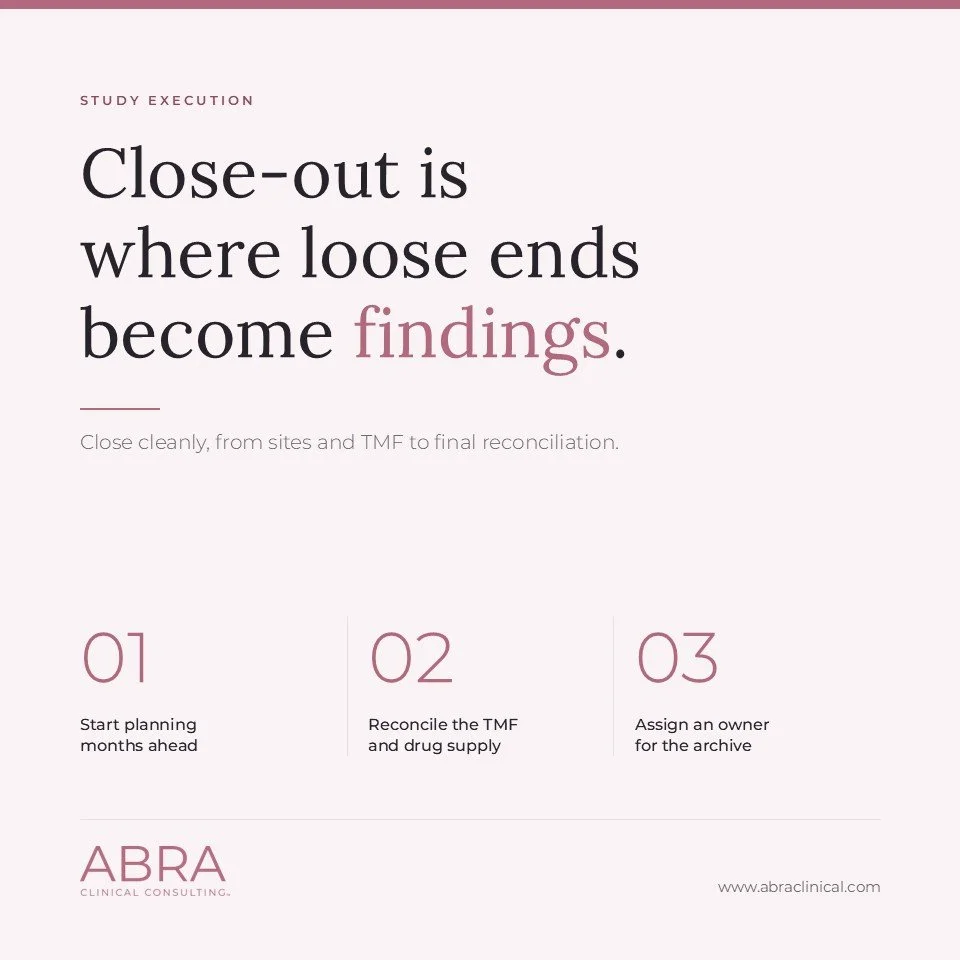
Study Close-Out Done Well
Study close-out is where loose ends become inspection findings, unpaid invoices and lost records. Closing well means planning it before the last participant's last visit: site close-out visits and investigational product reconciliation, final site payments, a complete and reconciled trial master file, regulatory and ethics notifications, results disclosure, vendor contract close-out, final financial reconciliation and secure archiving with access for years to come…
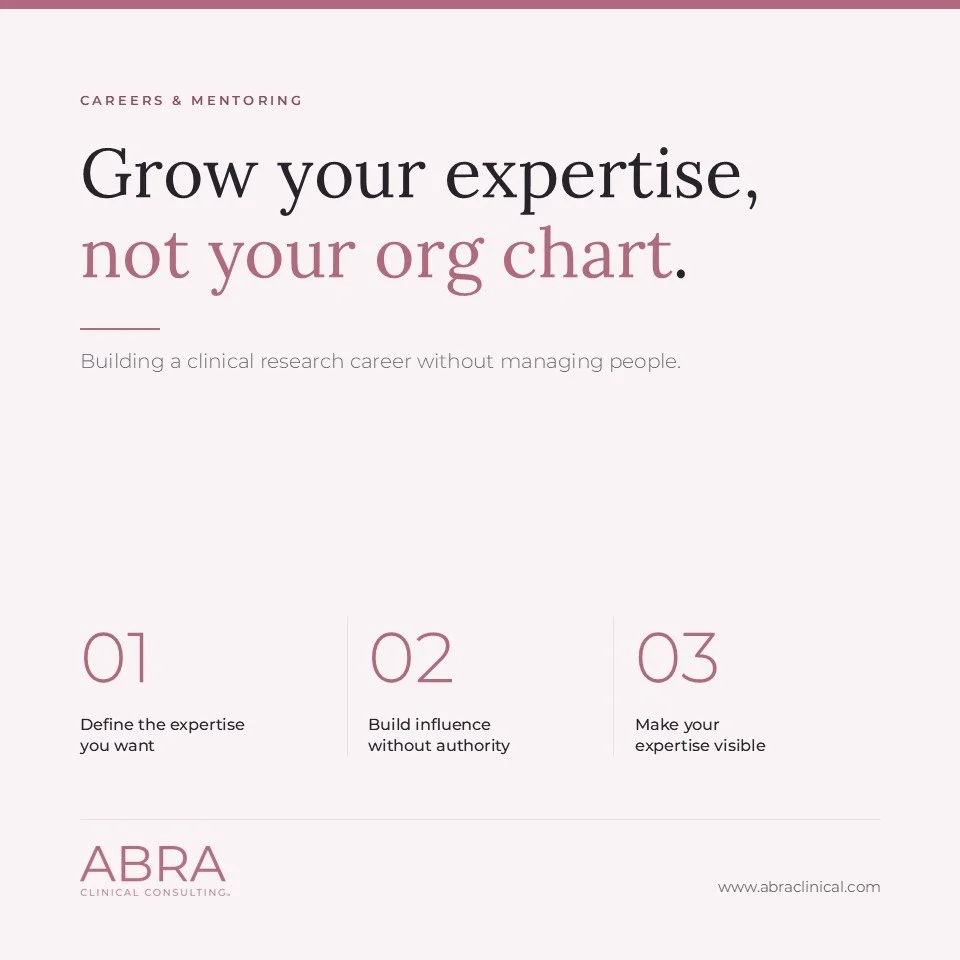
Expert Paths: Building a Clinical Research Career Without Managing People
You can build a rewarding clinical research career without managing people. Expert paths grow through deepening specialized knowledge, expanding the scope and complexity of the problems you solve, building influence across teams and organizations, and making your expertise visible. The key is to be deliberate: define the expertise you want to be known for, seek out the work that builds it and have open conversations with your manager about what growth looks like when it isn't measured in direct reports…
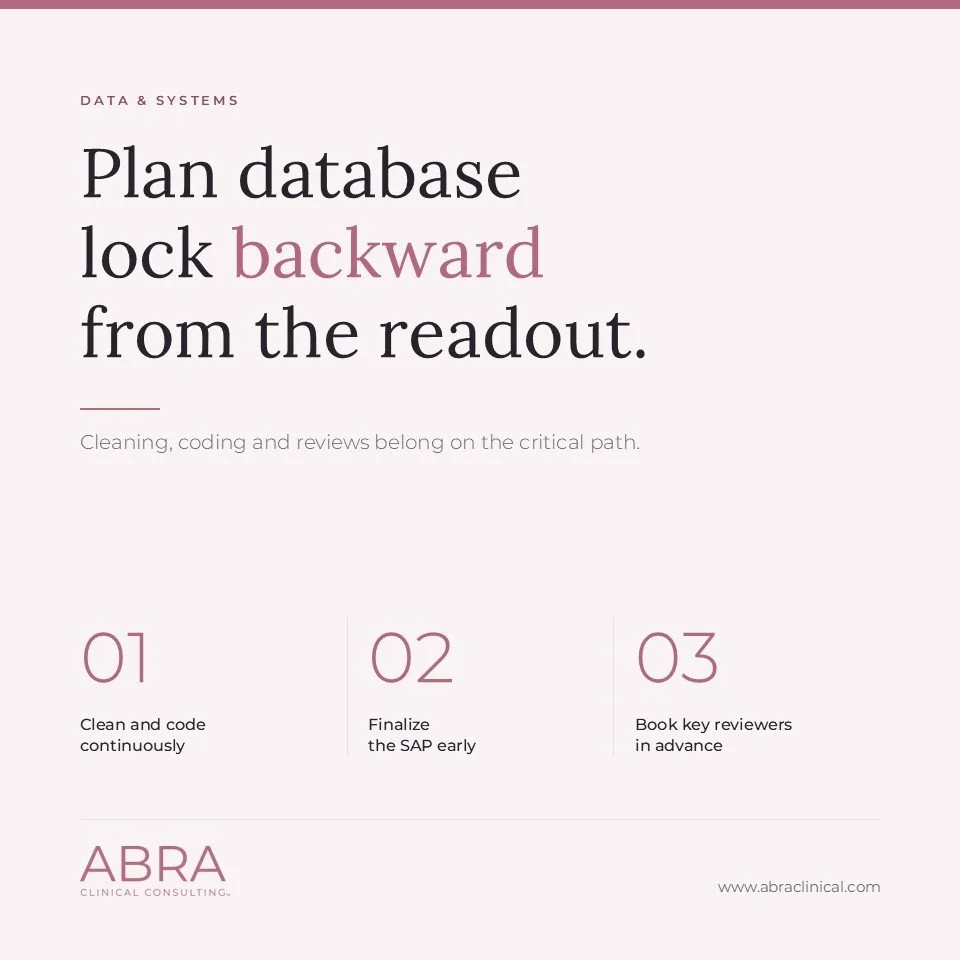
Plan Database Lock Backward From the Readout
Database lock dates slip when planning starts at the last patient's last visit. The sponsors who hit their readout dates work backward from the topline date, identifying every activity between last visit and results, assigning owners and durations, and starting the long-lead work, such as data cleaning, external data reconciliation and analysis planning, months before the study ends. A lock plan is a critical path, not a checklist…
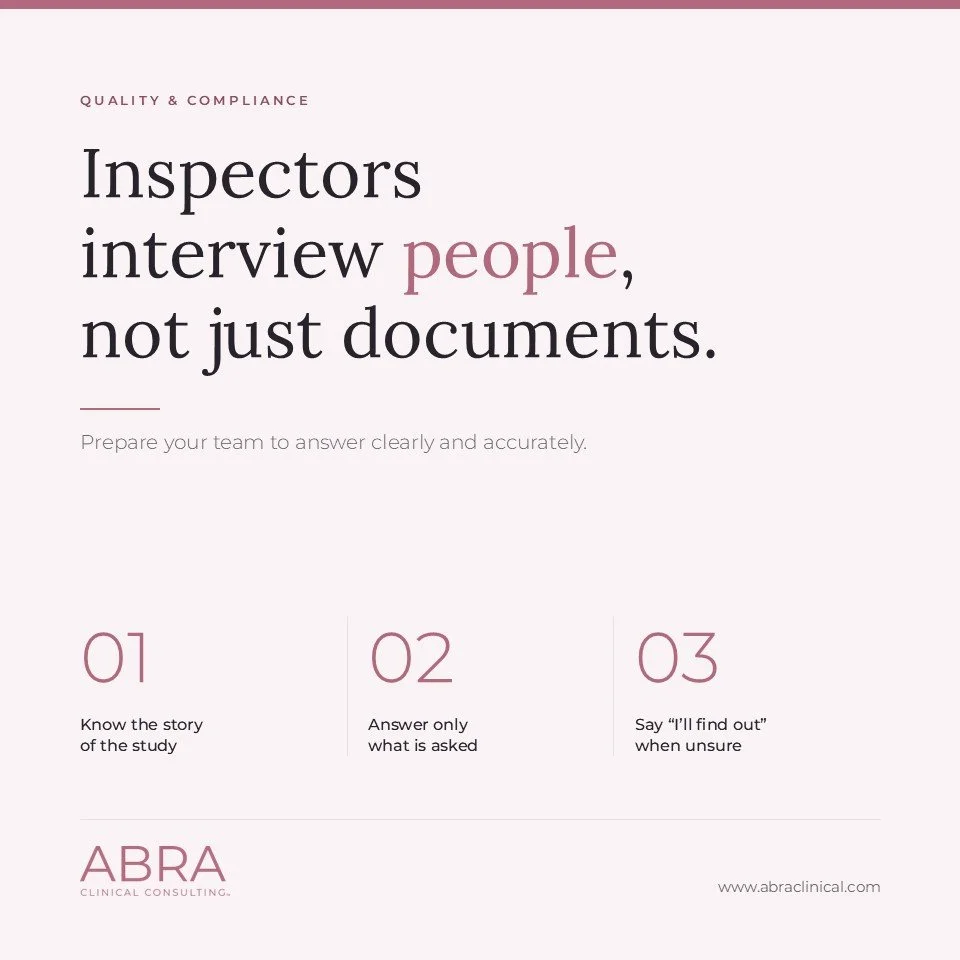
Preparing Your People for Inspection Interviews
GCP inspectors interview people as well as reviewing documents, and how your team answers can shape the outcome as much as the trial master file does. Good preparation helps people explain their roles and processes accurately, answer only the question asked, find supporting documents quickly and say "I don't know, but I can find out" when that's the truth. The goal is not rehearsed answers; it is clear, honest and confident explanation of how the study was actually run…
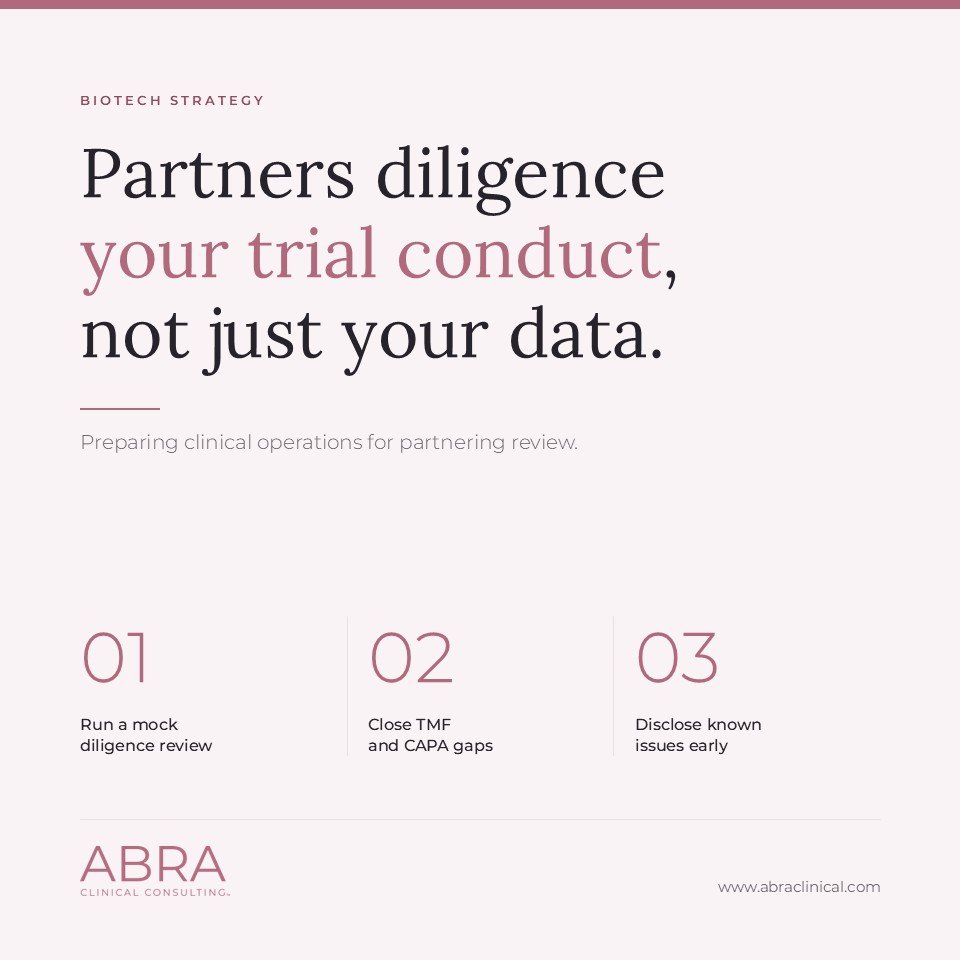
Is Your Clinical Program Partnering-Ready?
A potential partner will look past your topline data to how the trial was run. Partnering-ready clinical operations mean an inspection-ready trial master file, clean and well-documented data, clear vendor oversight records, transparent handling of deviations and safety, contracts that can be assigned or transferred and a team that can answer questions quickly and consistently. The time to prepare is months before the first diligence request, not the week the data room opens…
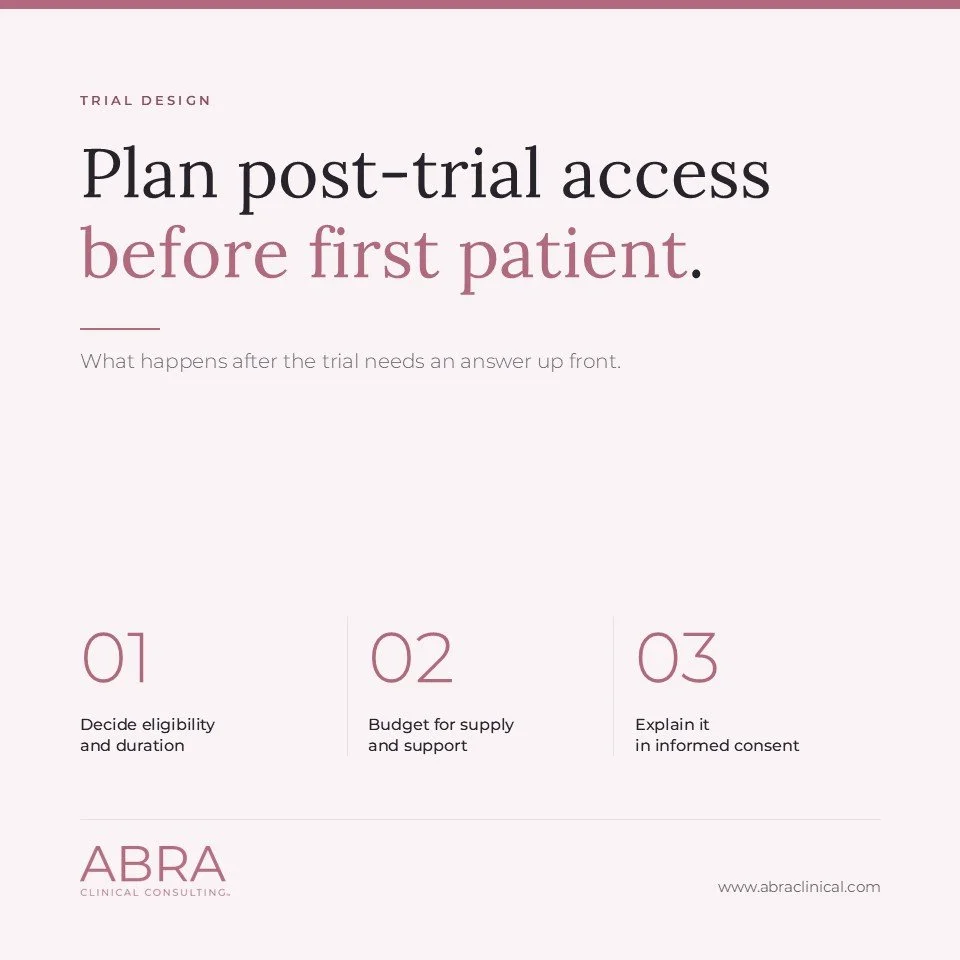
Post-Trial Access: Plan It Before First Patient
Participants, investigators and ethics committees will all ask what happens when a trial ends, and the answer should exist before the first participant enrolls. Post-trial access planning means deciding in advance whether, how and for whom continued access to the investigational product will be provided, how continuity of care will be handled and how this will be explained during informed consent. Sponsors who leave it until the last visit face hard choices under pressure…
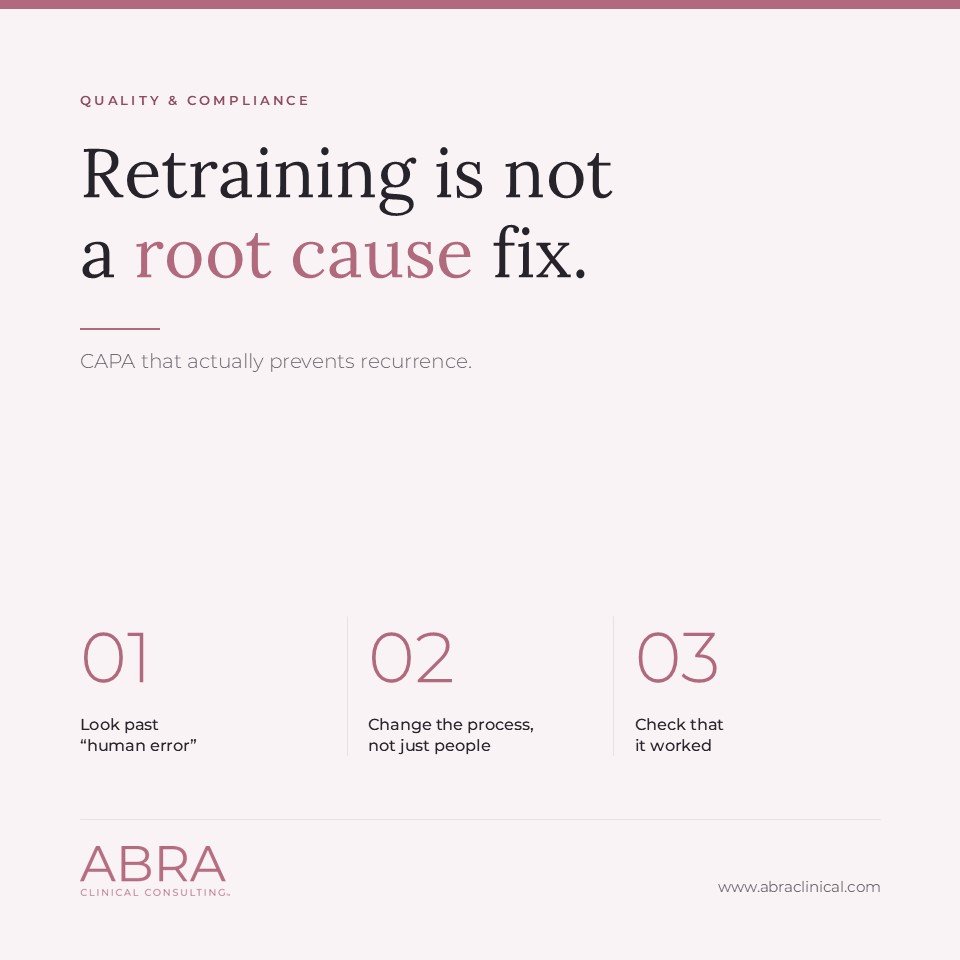
CAPA That Actually Prevents Recurrence
An effective corrective and preventive action plan fixes the immediate problem, identifies the real root cause, changes the process or condition that allowed the problem to happen and then checks whether the change worked. Most weak CAPAs share a signature: the root cause is "human error" and the action is "retrain staff". When the same issue reappears months later, the CAPA has failed, however neatly it was documented…
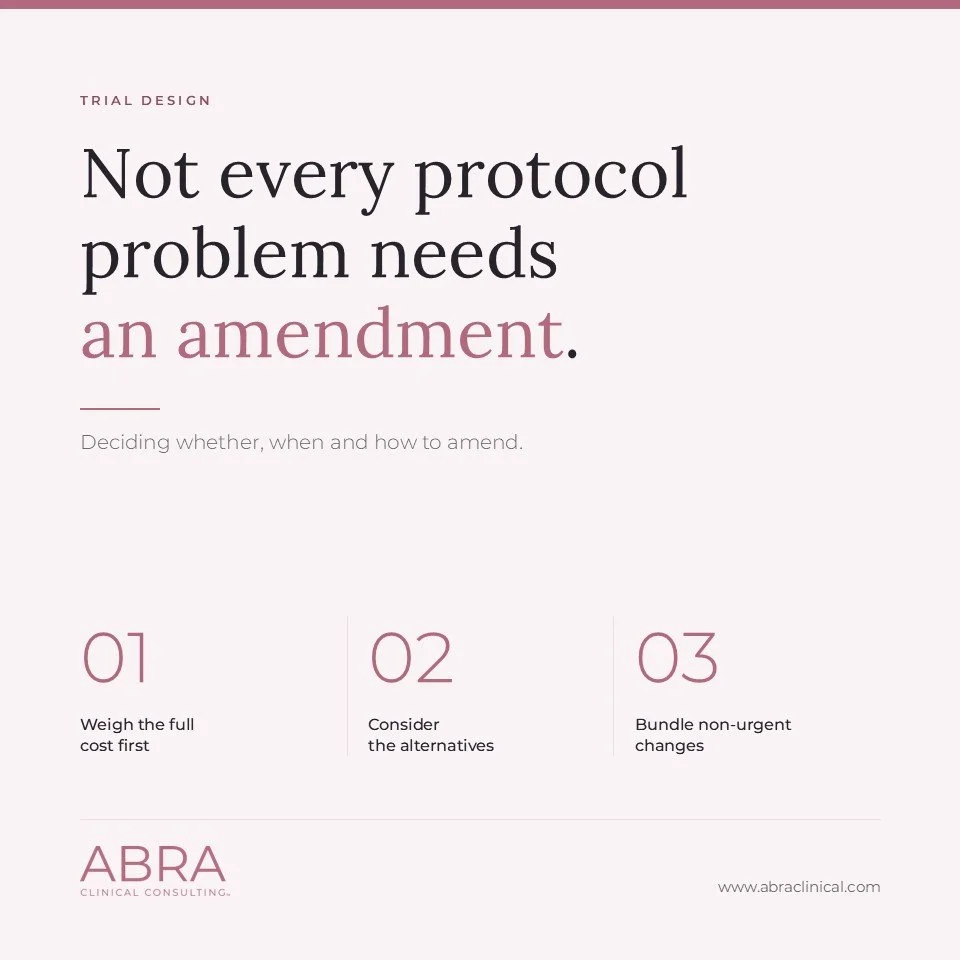
Amendment Governance: Deciding Whether to Amend at All
Good amendment governance starts with a question most teams skip: does this problem actually require a protocol amendment? Some do, especially those involving participant safety, scientific validity or regulatory requirements. Many others can be solved through clarification letters, training, operational changes or better site support. When an amendment is needed, a disciplined process weighs the full cost, bundles changes where it is safe to do so and plans implementation across every site and system…
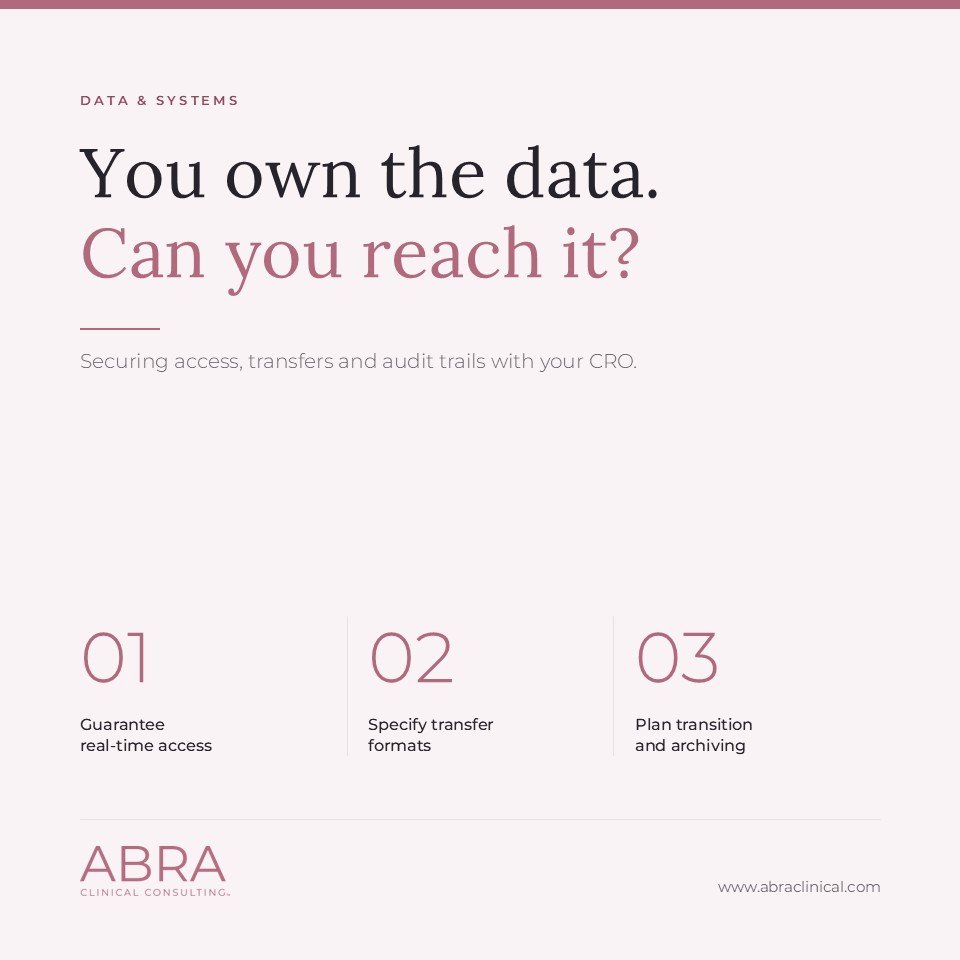
Data Ownership and Access in CRO Relationships
Sponsors usually own their clinical trial data on paper, but ownership means little without access. Securing it requires contract terms that guarantee real-time access to study systems, scheduled data transfers in agreed formats, audit trails and metadata, cooperation when changing vendors and clear rules for archiving and retention at study end. The time to negotiate all of this is before the contract is signed, not when you need the data…
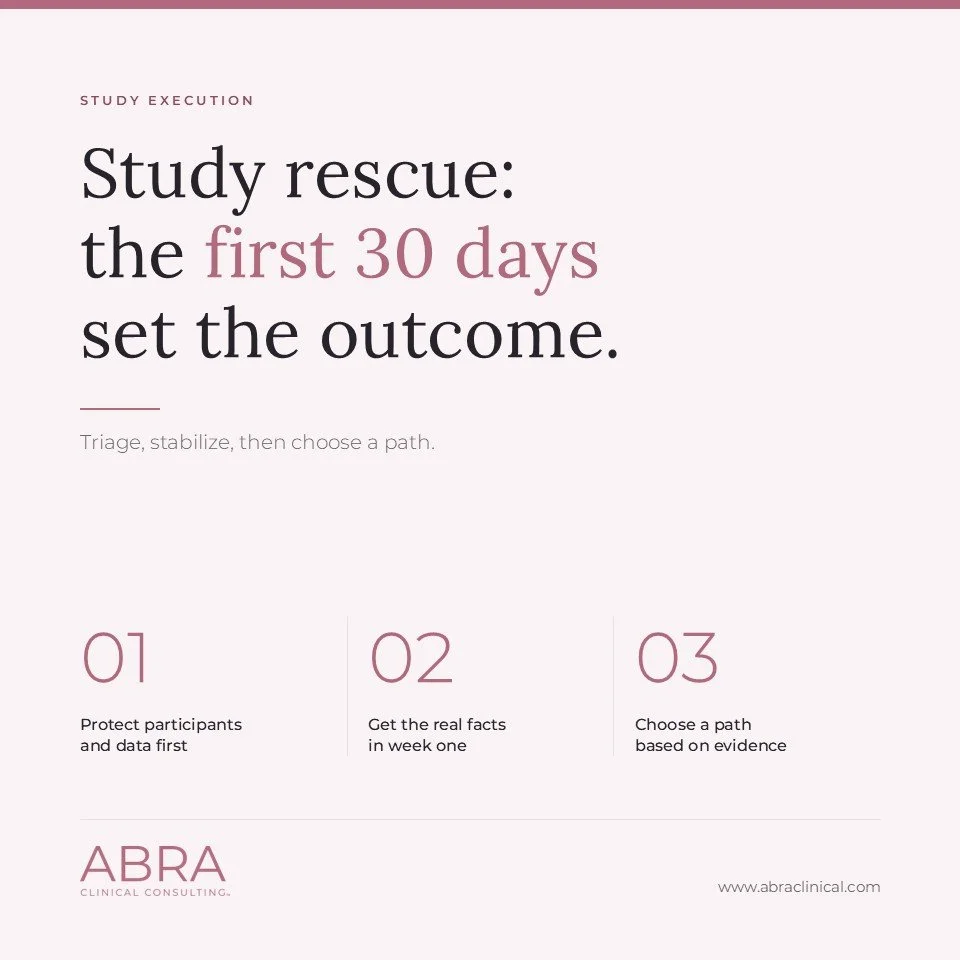
Study Rescue: Triage in the First 30 Days
When a clinical study is in trouble, the first 30 days decide much of what follows. Effective rescue starts with protecting participants and data, then establishes the facts quickly, stabilizes the most urgent problems, communicates honestly with stakeholders and chooses a path forward based on evidence rather than hope. The most common mistake is changing everything at once before understanding what is actually wrong…
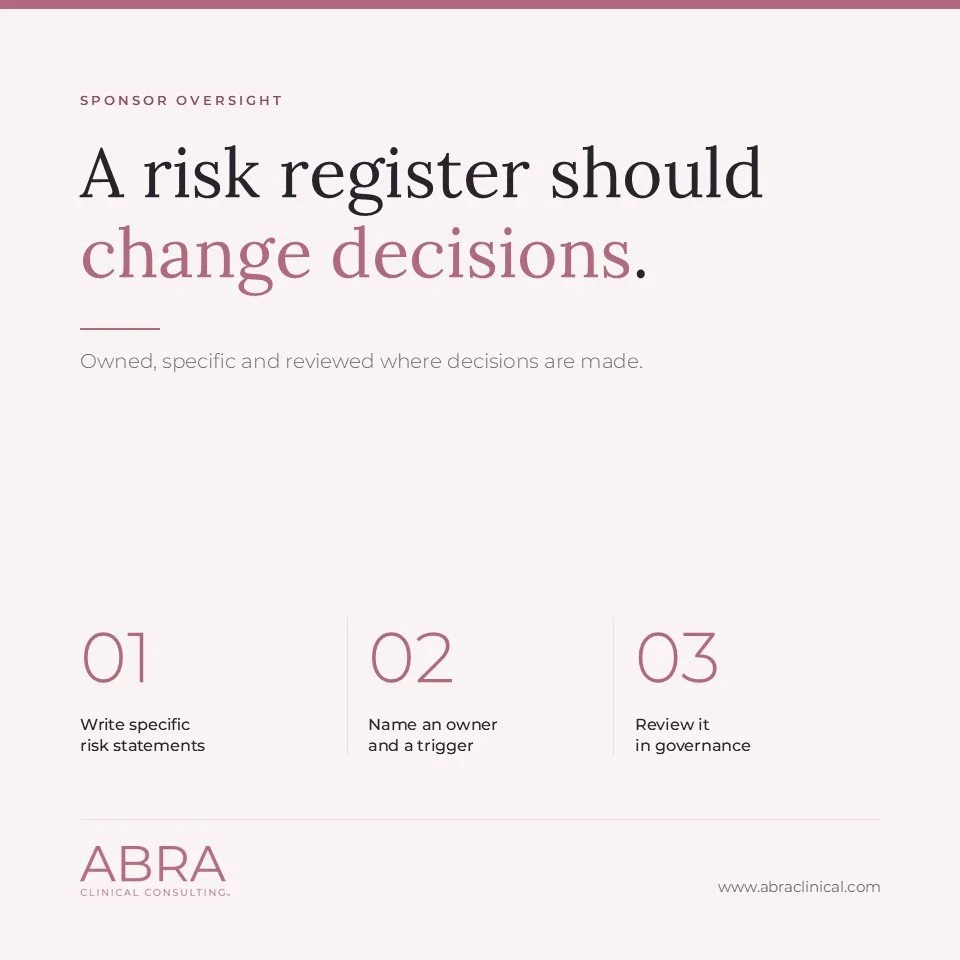
A Study Risk Register People Actually Use
A study risk register earns its place when it changes decisions. That means a short list of specific risks, each with a named owner, a clear trigger, a planned response and a review date, discussed regularly in governance meetings and updated as the study evolves. Most registers fail because they are written once to satisfy a process, filled with generic risks and never opened again…

Running First-in-Human Outside the US: The Trade-Offs
Running a first-in-human study outside the US can offer faster start-up, lower costs and access to experienced phase 1 units, and some countries offer incentives that make the economics attractive. The trade-offs are real, though: the data must be acceptable to FDA later, the program needs a clear plan for moving to a US IND, and operating in another regulatory system adds legal, logistical and oversight work that small sponsors often underestimate. The right answer depends on the program, not on the trend…